
As an Amazon Associate I earn from qualifying purchases.
A 1920s Christmas party dress has to do more than sparkle. It has to get through the party you are actually going to: three hours at a family table, a packed kitchen at a friend’s place, a dance floor, or a cold walk from the parking lot in December. So this guide sorts 44 looks by the kind of party, with the tests each dress has to pass, plus honest 1920s fit help, care notes and a late October ordering plan. Invitations start landing in November, and popular sizes can sell out well before the big week.
Links marked (paid link) are affiliate links. The pictures are styling inspiration, so search results will vary.
How to Choose a 1920s Christmas Party Dress for the Party on Your Invitation
Start with the party, not the color. Four questions settle most of it:
- Will you sit or stand? A dinner means hours in a chair. A cocktail party means hours on your feet.
- Will you dance? If yes, the dress has to move with you and stay put when you raise your arms.
- How far will you walk outside? A block in freezing air changes what you wear on top and on your feet.
- Who will be there? Your manager, your grandmother and your best friend all suggest different necklines.
Once you know the party, these searches are a sensible starting point: beaded drop-waist flapper dresses (paid link), long-sleeve sequin sheath dresses (paid link), velvet midi dresses (paid link) and satin slip dresses (paid link). Then try every dress on at home with the shoes and underwear you plan to wear, and run the tests in the section for your party before you take the tags off.
The Office Party: Desk to Bar in One Dress
Office parties often start straight from work, or after a quick change in the restroom, and usually end standing at a restaurant or bar with colleagues. The dress should read as festive, not as a costume, and look right next to the people you see every Monday.
What the dress has to survive
- Hours at a desk first. A lining with a little stretch helps. Sequins on the seat and inner arms scratch and snag chair fabric.
- The reach and bend test. Raise an arm to wave at the bar, then bend to pick up a dropped bag. If either move needs a hand on the hem, save the dress for another party.
- The quick change. A blazer over the dress by day, off at five, with a long pearl strand and a lipstick waiting in your drawer.
Looks that pass

Navy and gold Deco print shift. A gold geometric grid on navy is the 1920s idea most at home in an office: a straight, sleeveless shift that sits well under a blazer by day. Switch to T-strap heels at five.

Red long-sleeve sheath. Long sleeves, a modest neckline and a textured red fabric look festive without a single sequin. A sheath this fitted wants a full slip so it slides over tights instead of clinging.
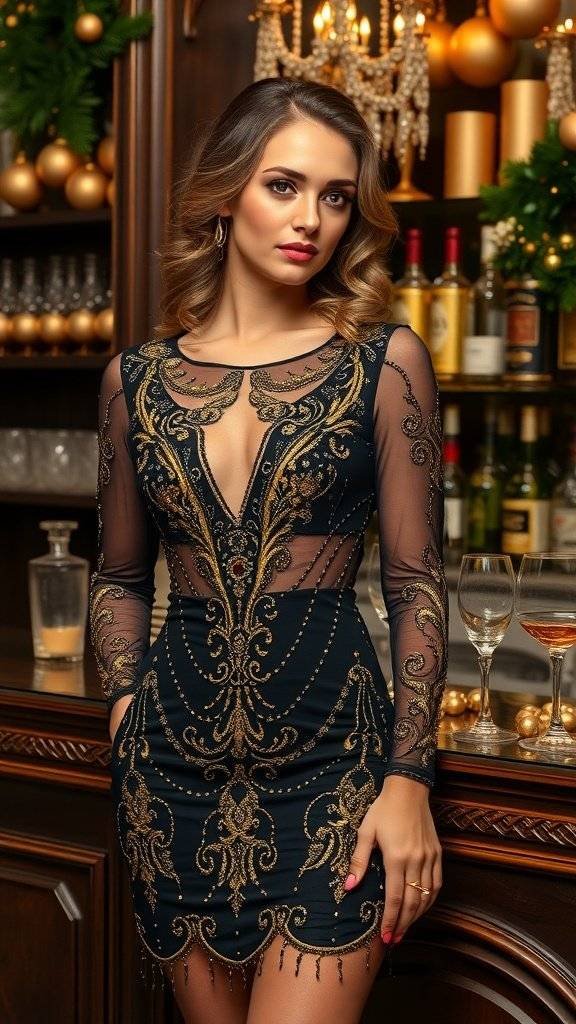
Black lace with gold embroidery. Sheer long sleeves and gold Deco scrollwork on black make this the boldest office pick here. The mini length depends on your workplace: add opaque black tights if yours leans formal.
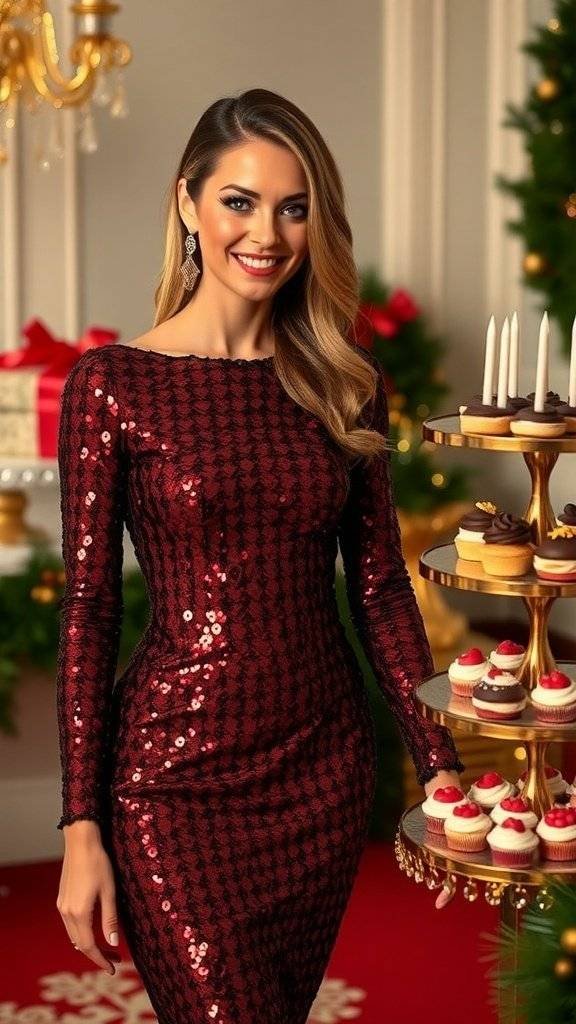
Burgundy sequin sheath. Small sequins in a check pattern read as texture from across the room rather than a disco ball. Long sleeves mean no cardigan, and burgundy hides a splash of red wine.

Black satin slip with a finger wave bob. The simplest dress in this post is also the most flexible. Over a fine black knit it works at a desk; at the bar, take the knit off. Silk satin can water spot, so mind the ice bucket.

Silver star sequin shift. A straight shift with scattered stars is playful enough for the team party and easy to move in at a crowded bar. Check the inside seams at the underarms before you buy, because that is where sequins rub.

Black lace V-neck with a scalloped hem. Black lace is the office party workhorse: festive close up, quiet across the room. The uneven lace hem nods to 1920s handkerchief hems. More ideas in our lace cocktail dresses guide.

Black lace with a keyhole neckline. A higher neck, a fitted waist and an opaque lining make this the safest pick when your manager is also on the dance floor.
Family Christmas Dinner: Three Hours in a Chair
This is the longest sit of the season: drinks, a big meal, dessert, then the sofa. Small children may land on your lap, and the fire may be lit. Comfort and stain sense matter more here than at any other party.
What the dress has to survive
- The sit test. Sit in front of a mirror before you buy. Slits ride up, waist seams dig in, and stiff sequin skirts crease and poke.
- Gravy and cranberry. Dark colors and velvet hide marks. Ivory and pale satin do not, so keep a napkin across your lap.
- Heat. A full house and a lit fire get warm. Sleeveless velvet, or a dress with a wrap you can take off, beats a heavy beaded gown with sleeves.
- Little hands. Loose fringe and sharp beads get pulled. Smooth fabrics win.
Looks that pass
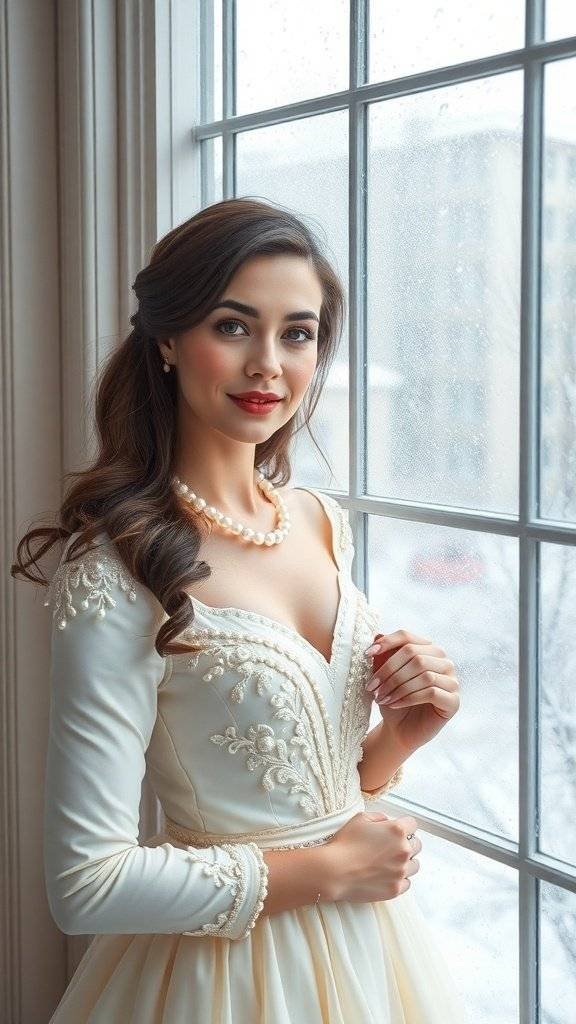
Ivory embroidered long sleeves. Beautiful by a snowy window, risky at the table. If you love pale colors, wear this for the drinks hour and keep a dark wrap nearby for the meal.

Burgundy crushed velvet, off the shoulder. Velvet is the fabric for a seated dinner: warm, forgiving of creases, and burgundy hides cranberry sauce. Keep your distance from the fire, though, since long skirts and open flames do not mix.

Aubergine velvet with a pearl collar. A V-neck and short cap sleeves stay comfortable from the turkey to the board games. The pearl collar does the 1920s work, so the dress can stay plain.
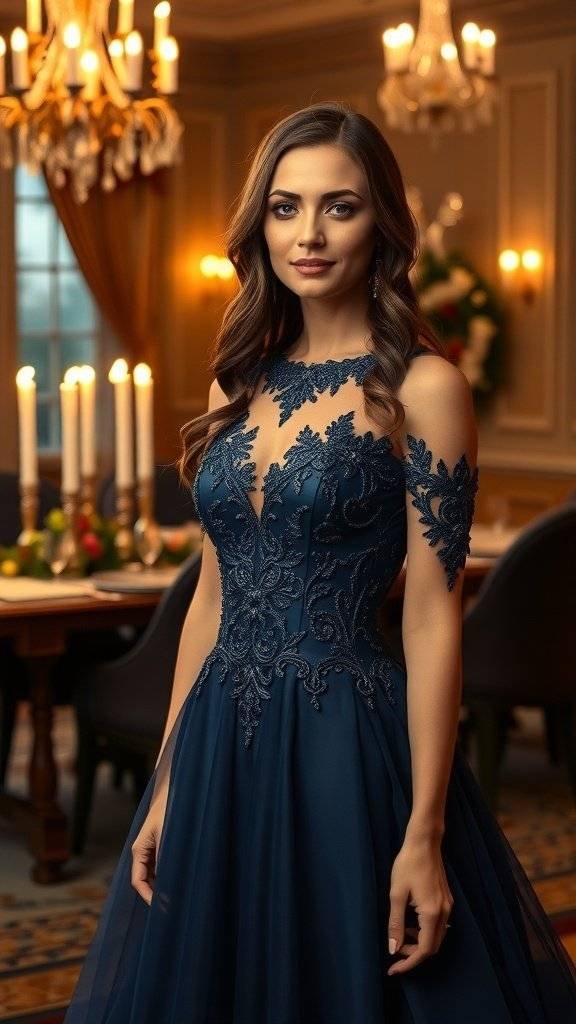
Navy lace at the dining table. Lace appliqué and an illusion neckline look formal, but a full skirt sits comfortably. Navy is a softer choice than black at a family table. Check that shoulder lace is lined, because scratchy appliqué rubs over three hours.
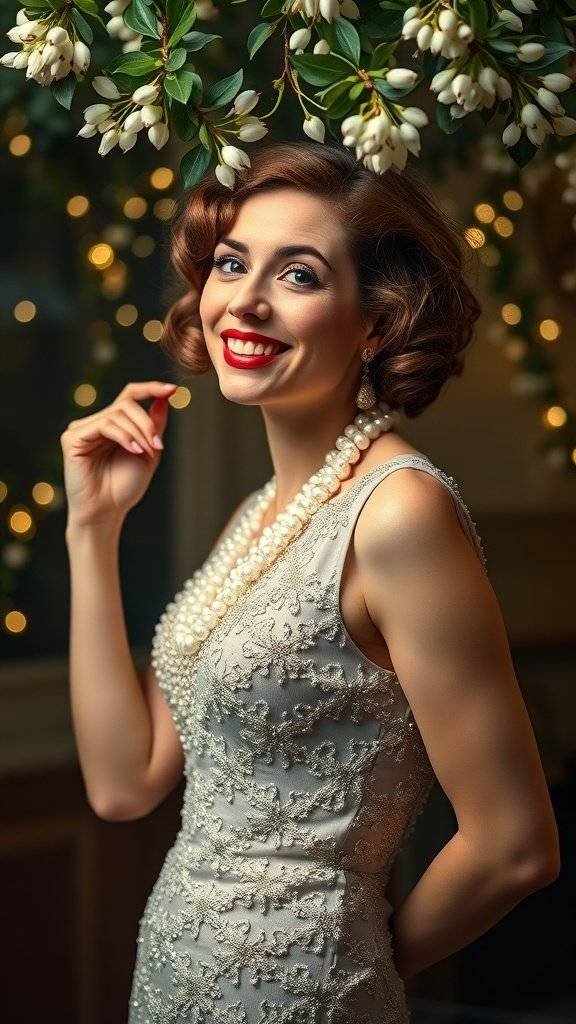
Ivory beaded shift with a long pearl strand. This is the most 1920s silhouette here: straight, sleeveless and beaded, with a long rope of pearls. At the table, knot the strand at your chest so it stays out of the gravy.

Black velvet slip. Velvet in a plain slip cut is the easiest dress here to sit in for hours. Add a fine cardigan or a velvet jacket if the house runs cool.

Emerald pleated maxi with tie shoulders. Soft pleats leave room after the second plate. The cut is not 1920s, but the emerald and gold shows how color alone can carry a Gatsby Christmas theme.
A Cocktail Party at a Friend’s Place: Standing Room Only
Small rooms, a kitchen island, a glass in one hand and a plate in the other, coats piled on a bed. You will stand most of the night and squeeze past people in hallways. If you are hosting instead, our Roaring 20s cocktail recipes cover the drinks.
What the dress has to survive
- Four hours standing. Low or block heels. The T-strap is the 1920s answer, and it stays on your foot.
- The hallway squeeze. Feather hems and wide skirts get stepped on. Knee to midi length, close to the body, is easiest.
- One free hand. A wristlet or a dress with pockets beats a clutch when you are holding a drink.
- Coat on the bed. Any wrap you wear over should survive being crushed under five other coats.
Looks that pass

Champagne sequin plunge. Soft champagne sequins glow under a host’s string lights without looking like stage wear. A neckline this deep needs double-sided fashion tape (paid link), and it suits a party of friends more than colleagues.

Gold fringe slip. Short fringe on a slip dress is light and comfortable all night. Long fringe catches on chair backs and bag straps; shorter layers like these stay tidy in a crowd.
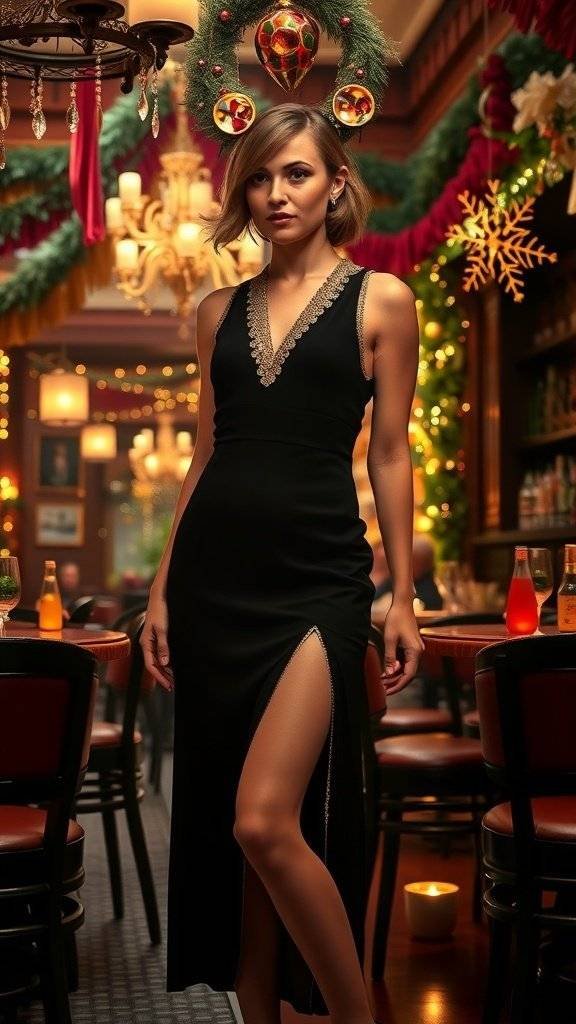
Black column with a beaded V. A long column with a high slit gives you a full stride. Check where the slit lands when you sit; if it opens past mid thigh, have a tailor add a few stitches at the top.

Gold metallic mermaid at the bar. Mermaid skirts photograph well and are hard work on stairs and in tight hallways. Save the shape for a roomy house, or choose a straight column in the same fabric.
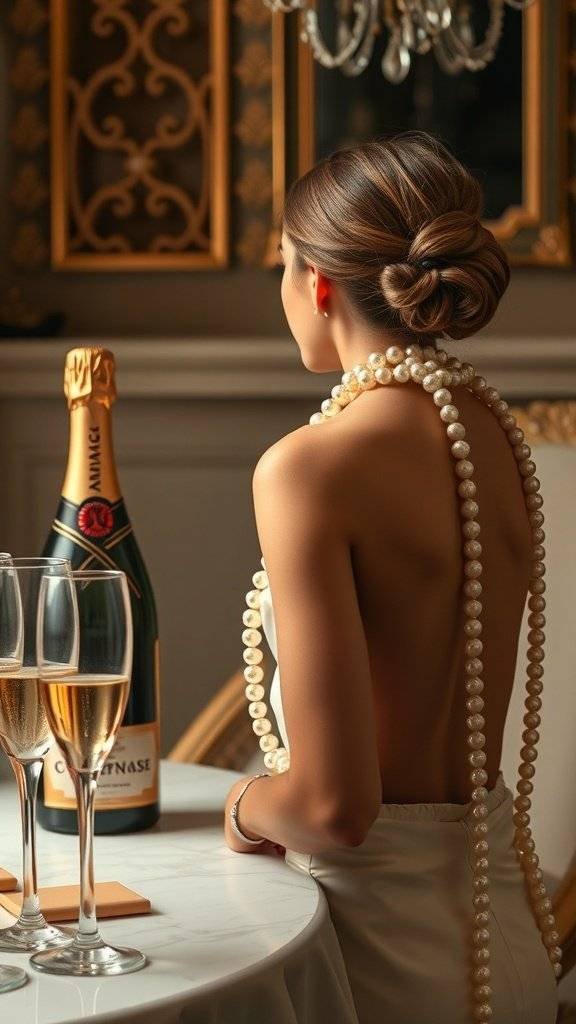
Pearls down a bare back. A long strand worn down a low back is an old evening trick, and it looks wonderful from behind. Use a clasp you trust, because a swinging strand finds every glass on the table.
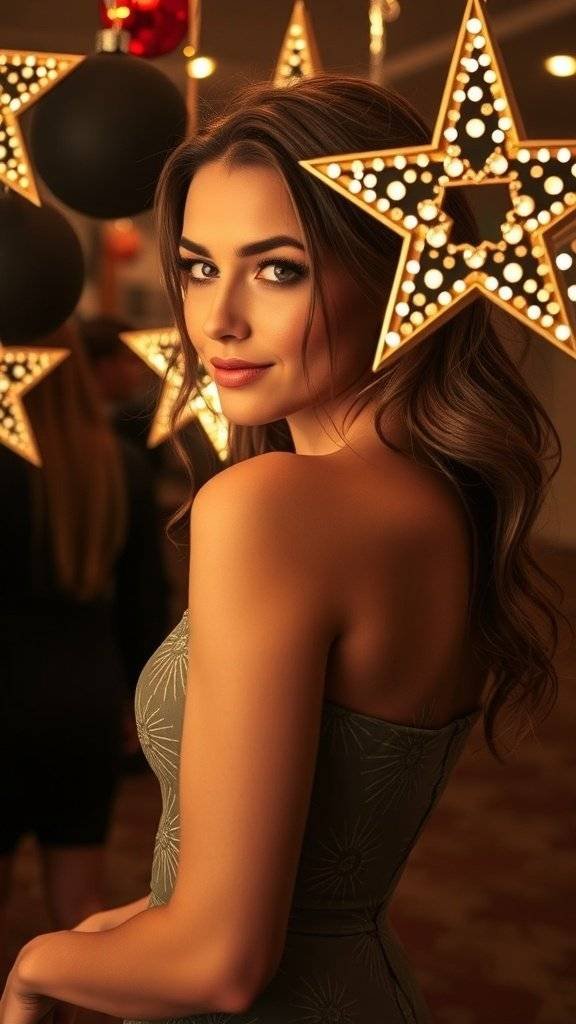
Sage beaded dress. Soft green beading is a fresh change from red and gold. All-over beading is heavy, so sit on a hard chair and lift your arms in the fitting room to check the straps carry the weight.
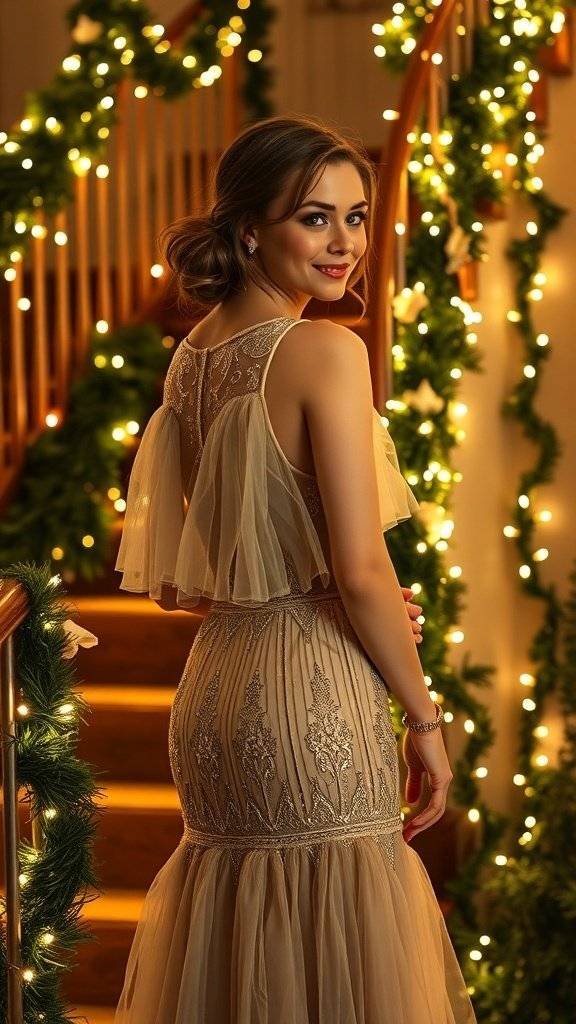
Champagne tulle with a capelet. Flutter sleeves cover the shoulders without adding heat in a crowded room. Tulle snags on sequined neighbors and tree branches, so this suits a smaller gathering.

Silver sequin halter. A halter and keyhole lean a little 1930s, and the high-low hem keeps the front clear of feet in a crowd. Sleeveless is the comfortable cut for sequins.
The Dinner Dance or Club Night: Built to Move
A band or a DJ, a real dance floor, maybe a Charleston lesson if the host is keen. This is where fringe earns its place, and where a beautiful dress that cannot move becomes a long night.
What the dress has to survive
- Arms up. Raise both arms and twist. Straps should hold, and the hem should stay where you are comfortable.
- Heat and friction. Polyester sequins do not breathe, and thighs rub on a dance floor. anti-chafe slip shorts (paid link) solve the second problem.
- Shoes. Dance in block-heel T-strap shoes (paid link) broken in at home, not new stilettos. Our 1920s high heels guide shows the period styles.
- Costume or dress? Flapper styles fill Halloween costume ranges in October. Check the fabric, lining and seams before you treat a costume dress as party wear.
Looks that pass
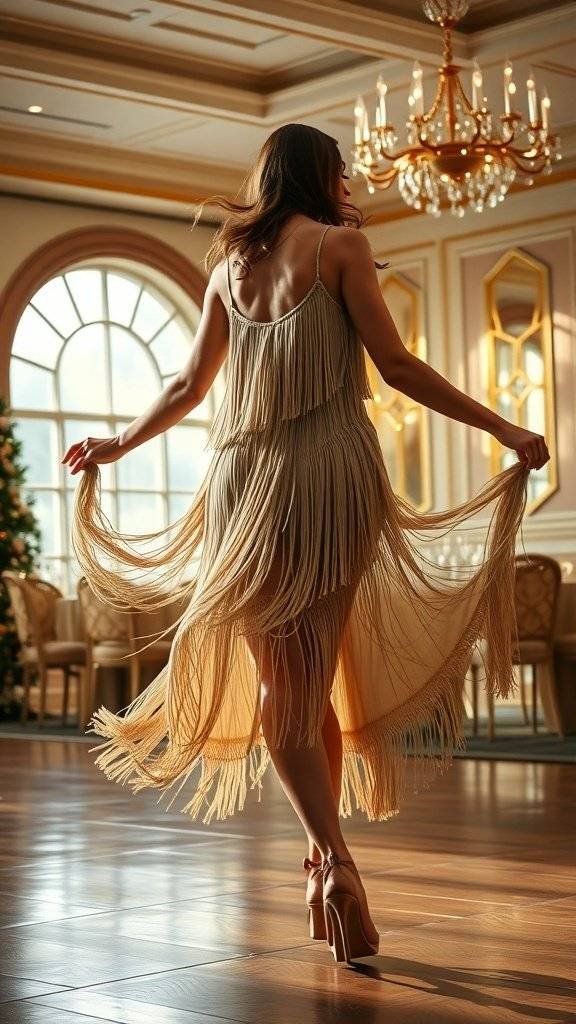
Champagne fringe in a twirl. This is what fringe was made for: tiers that flare when you spin and settle when you stop. Look for fringe sewn in several layers on a sturdy base, which tangles less than a single row.
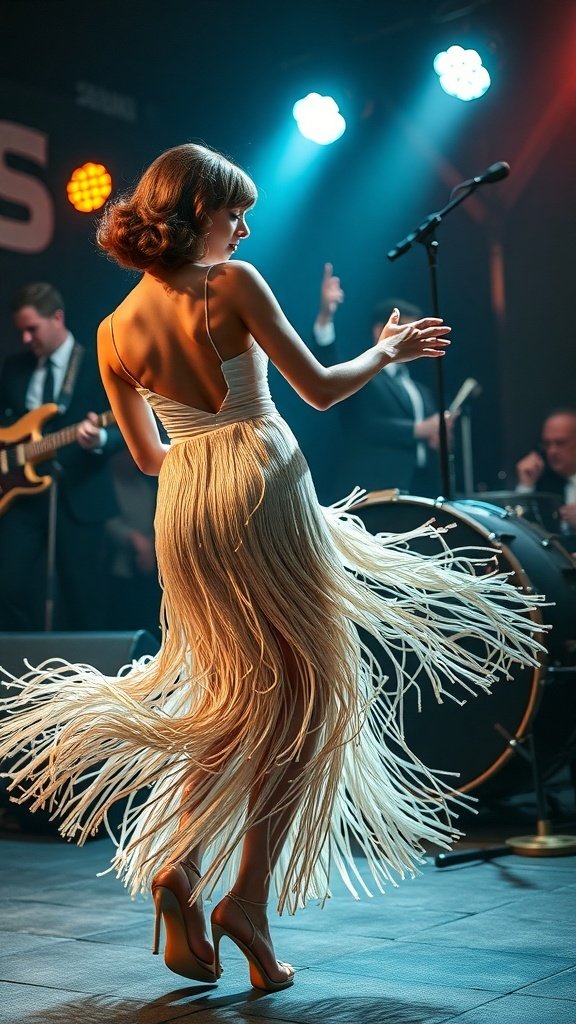
Long fringe in front of the band. Long fringe on a backless bodice shows off every step, but it tangles and catches heels. Practice a few moves at home in your party shoes. For more choice, compare fringe flapper dresses (paid link).
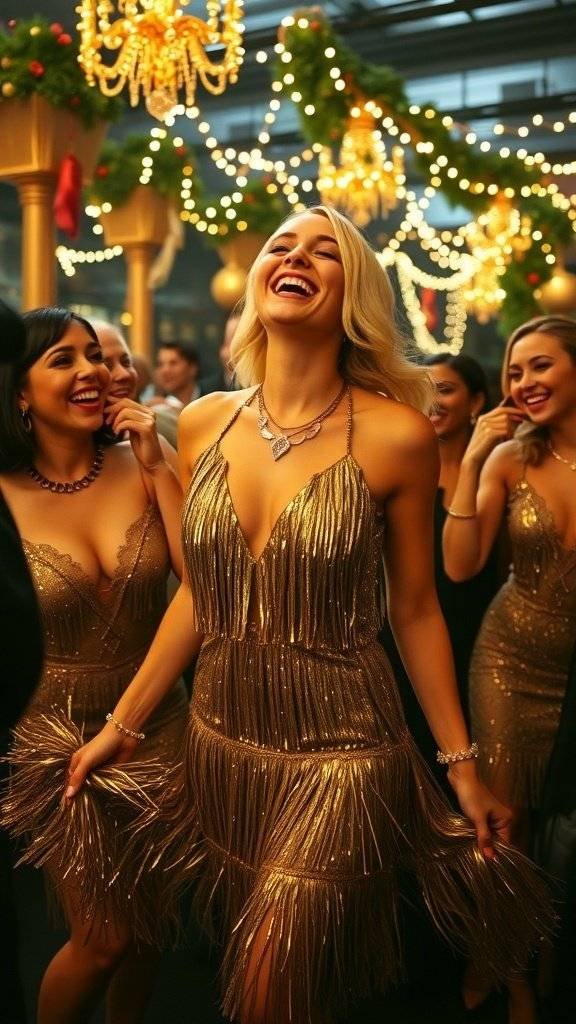
Gold fringe for a group night. If friends are coordinating, gold fringe in different lengths and necklines looks deliberate without turning into matching costumes.

Dark emerald beaded fringe. Beaded fringe has weight, so it swings and drops back neatly instead of flying up. The sheer fringed sleeves leave the arms free to move.
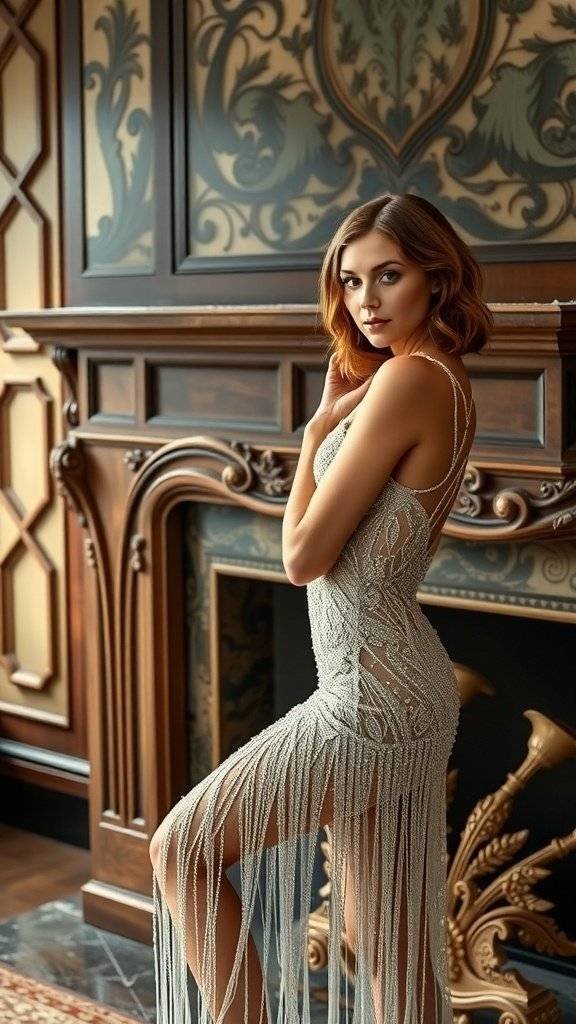
Silver beaded fringe. Fringe from hip to hem is very 1920s in spirit. When you sit between songs, sweep the fringe to one side so it does not crush and tangle under you.
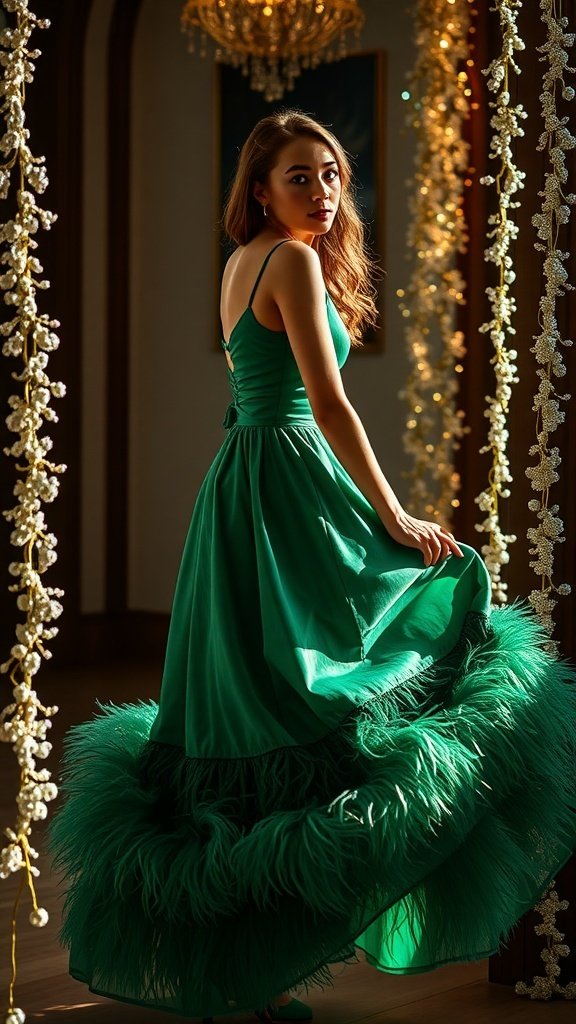
Emerald satin with a feather hem. A feather hem is gorgeous for the entrance and a hazard on a packed floor: feathers shed and partners step on them. Wear it for the photos and choose fringe for the dancing.
The Formal Gala or Black-Tie Ball: Floor Length, Long Night
Tickets, a seating plan, speeches and perhaps a ballroom with stairs. This is the one Christmas party where a floor-length gown is exactly right, and where the dress has to look as good at midnight as it did at seven.
What the dress has to survive
- Stairs and trains. Hold the skirt on stairs. A train needs a bustle or a wrist loop for dancing.
- Five hours of wear. Heavy beading pulls on straps, and thin satin creases where you sit through dinner.
- The photo from behind. Many gala gowns are all about the back, so check yours in a second mirror.
Looks that pass
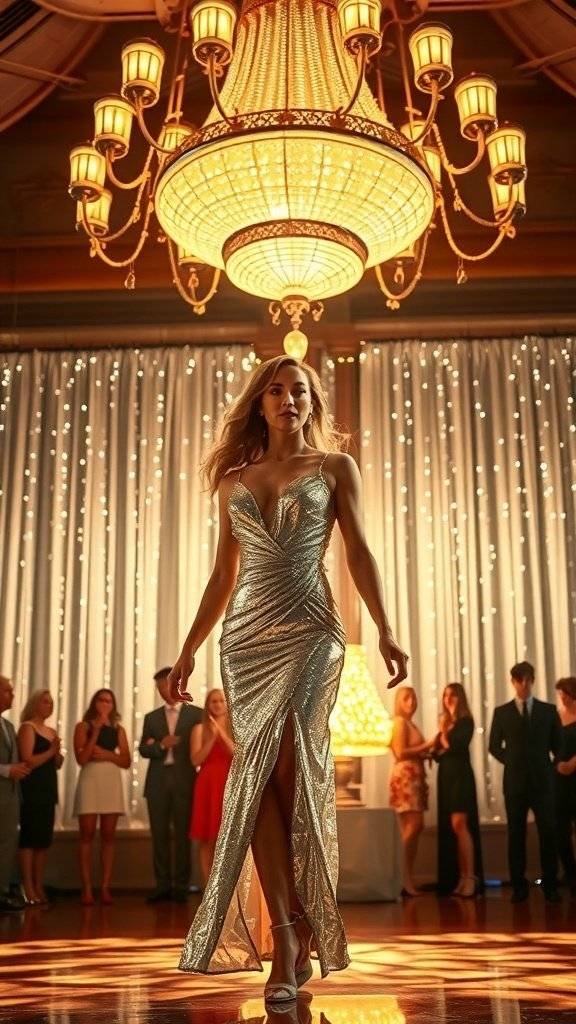
Silver drape with a walking slit. Draping across the body flatters and hides small creases late in the night. A front slit makes crossing a ballroom in a long gown easy.

Champagne textured sheath. A narrow floor-length gown in an all-over Deco texture is the quiet luxury option for black tie. Take a few steps in the fitting room, because narrow skirts limit your stride.

Silver beaded column for the entrance. A beaded column looks right in a grand doorway. Hemming one is skilled work because beads must come off and be sewn back, so allow extra time for alterations.
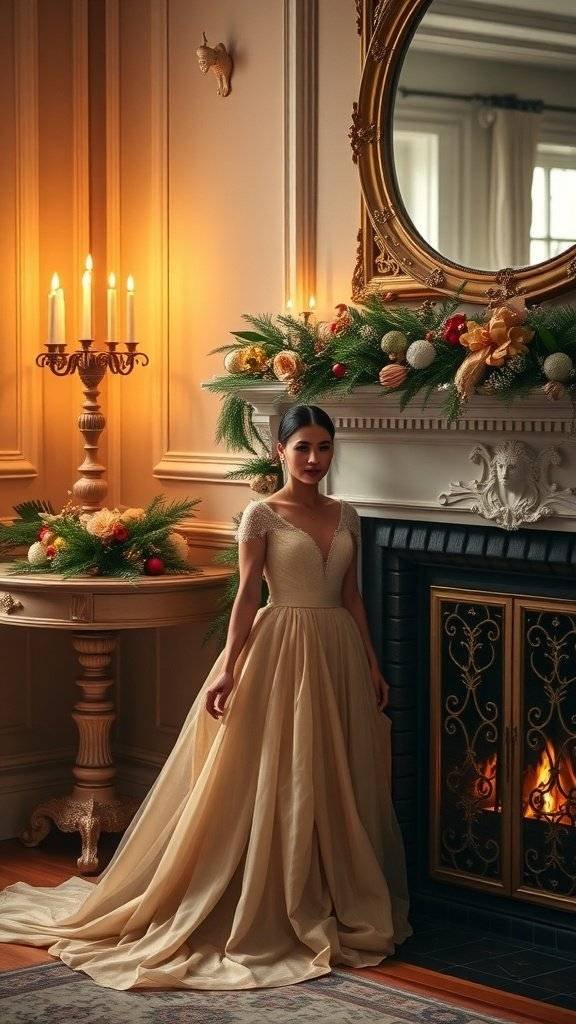
Champagne satin with a train. A full satin skirt and train suit a ball with room to move. Ask your tailor to add a bustle or a wrist loop so you can carry the train when you dance.
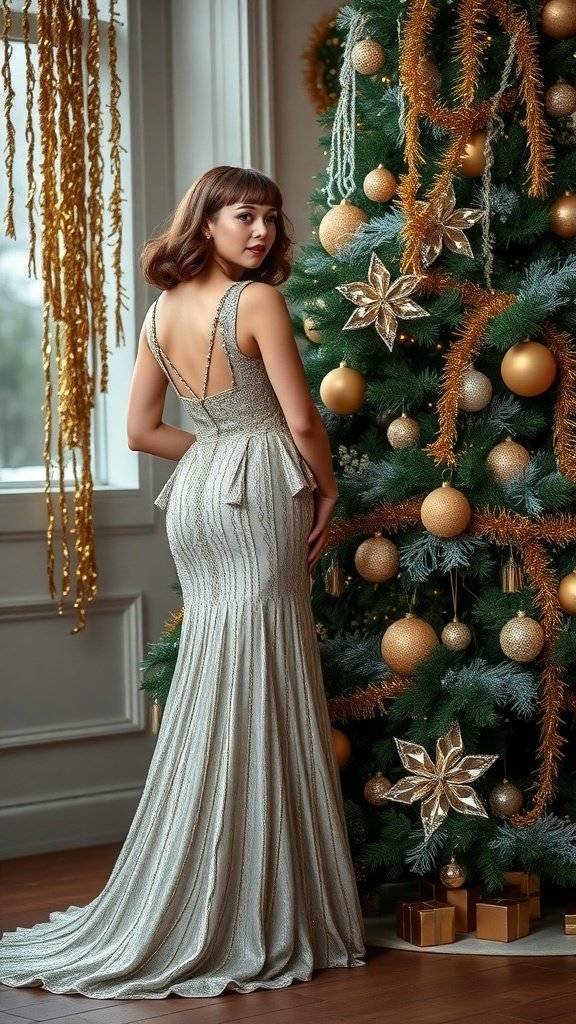
Pleated column with a peplum. Fine vertical pleats and a peplum at the hip echo the 1920s habit of putting interest at a low waist. Pleats also hide creases from the car ride.
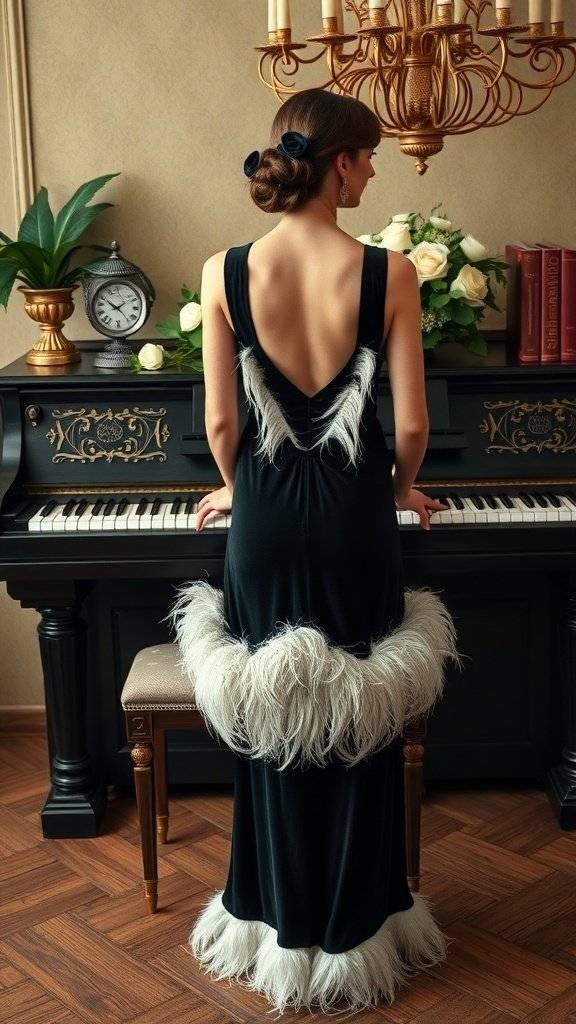
Black velvet with white feather trim. A deep back and feather trim feel like old Hollywood. Velvet is warm, so the open back balances it in a heated ballroom. Feather trim usually means dry clean only; check the label.

Red satin with a strappy open back. Seen from behind, this gown is all about the back. Satin creases where you sit, and a heavier satin creases less than a thin one, which matters through a long dinner.

Sapphire velvet slip. Deep blue velvet in a long slip cut is one of the most forgiving black-tie choices: no beads to snag, no sequins to scratch, and the pile catches the light.
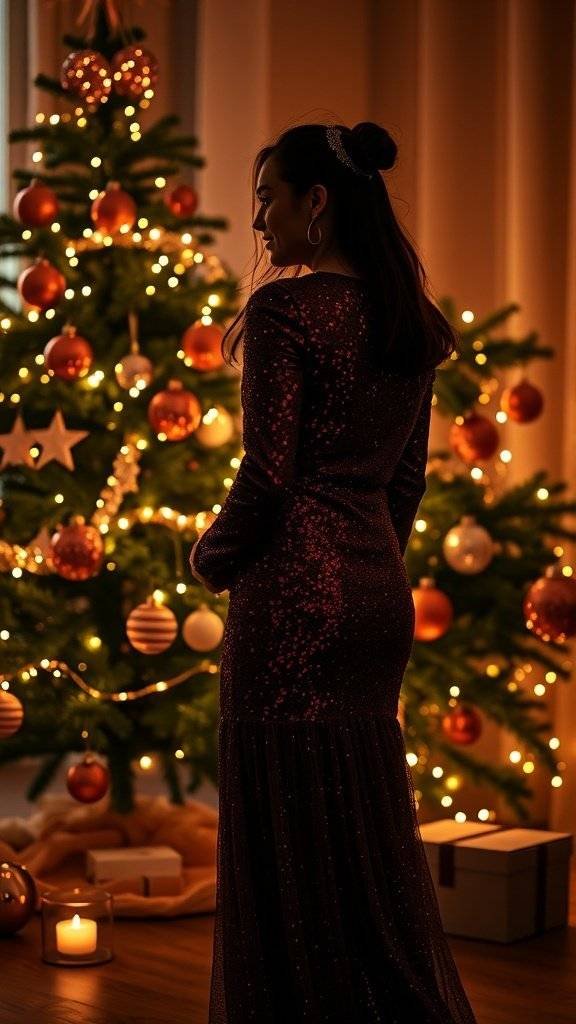
Burgundy sequin long sleeves. Full sequins and long sleeves suit a December ball in a cold city. Check the inner arms and underarms, where sequins rub and fall off first.
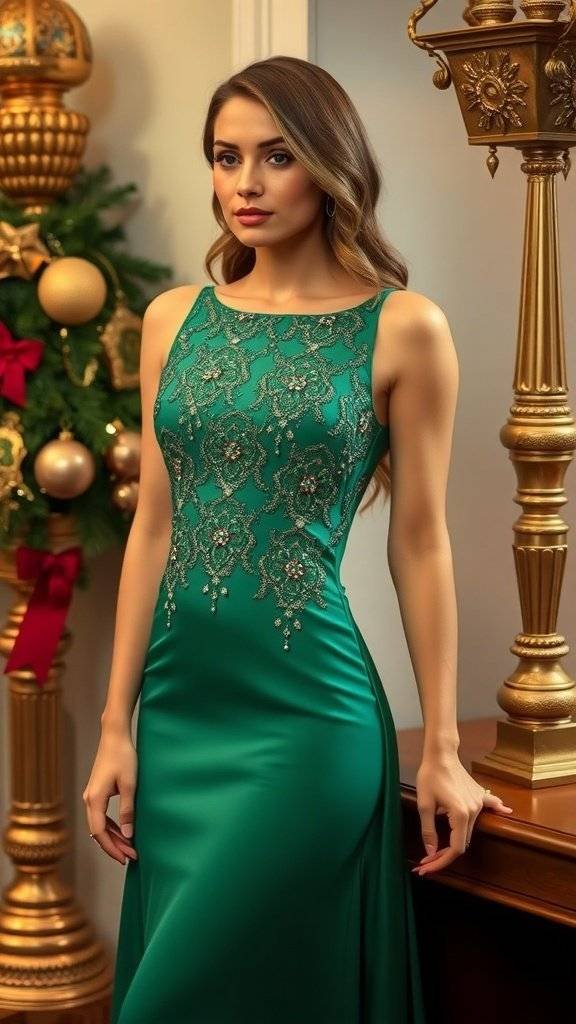
Emerald satin with a beaded bodice. Beading on the bodice only keeps the gown light enough for a long night, and the plain satin skirt sits well. Emerald and gold is the classic Gatsby Christmas pairing.
Getting There: Cold Walks, Cabs and the Coat Question
Many December parties mean a walk from the car or the train in freezing air. Women in the 1920s wore evening wraps, capes and fur-trimmed coats over their dresses. The modern version is a faux fur stole (paid link), a beaded evening cape (paid link) or a long wool wrap coat (paid link) long enough to cover the skirt.
What the dress has to survive
- Coat length. A coat much shorter than the dress crushes the skirt and leaves a line. For floor length, a cape or a long wrap coat is kinder.
- Feet. Walk in boots and carry your party shoes in a tote.
- Slush. Lift long hems at the curb, and choose a dark color if the walk is long.
Looks that pass
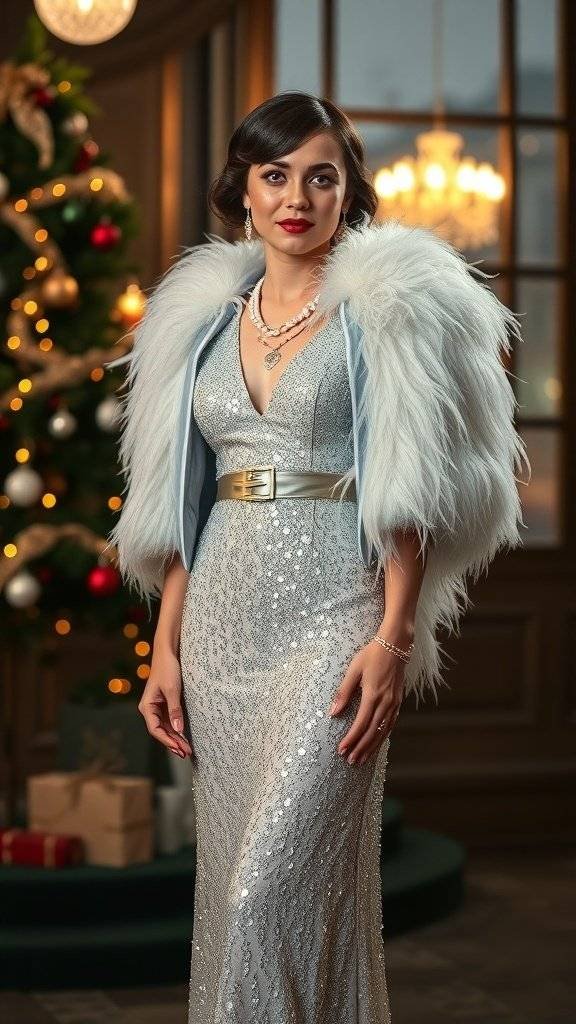
Silver sequins under a faux fur stole. A stole covers shoulders and arms on the walk in and comes off at the door without crushing anything. The gold belt is a modern touch; for a truer 1920s line, wear it low on the hip.
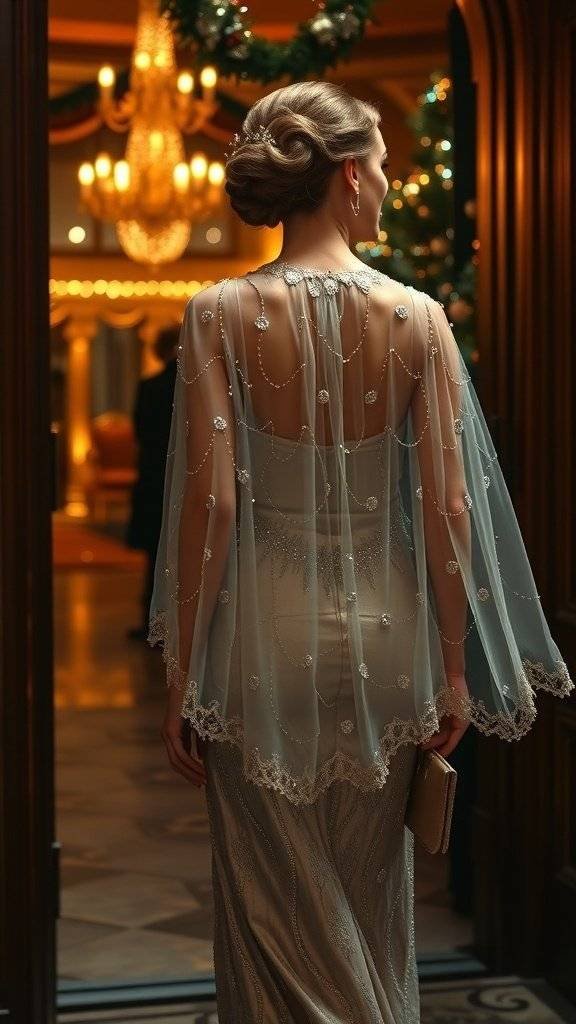
Sheer beaded cape over a gown. A cape slips over any neckline and never crushes sleeves. A sheer one is for looks, not warmth, so wear a real coat for the walk and keep the cape for the room.

Silver column in a snowy courtyard. Bare shoulders in snow are fine for a photo and nothing more. Keep the coat on until you are inside.

Silver satin under a winter moon. Satin feels cold in winter air and shows every drop of melted snow. A coat with a slippery lining slides on and off without catching.

Rose satin on a lit garden path. A wrap bodice sits flat under a coat, and soft pink is a change from red and green. For an outdoor lights walk, wear tights and boots and change shoes when you arrive.
1920s Fit Help: Drop Waist, Straight Shift or Bias Cut
Honest context first. Real 1920s evening dresses were mostly straight and loose, with a low or dropped waist, often in beaded or embroidered silk chiffon and georgette. Hemlines rose through the decade toward the knee, and evening hems were often uneven, with handkerchief points or sheer panels. The bias cut, linked with the designer Madeleine Vionnet, was developed in the 1920s but became the signature evening look of the 1930s. Many gowns in the photos above are modern dresses with Deco details, and that is fine for a party. For the bigger picture, see our 1920s fashion that still turns heads.
- Drop waist. The seam should sit at the high hip, not across the widest part of your hips. Size for bust and hip; the waist is loose by design. Sit down: the seam should not cut across your thighs.
- Straight shift. Size for the larger of bust or hip. Sequin and bead shifts rarely stretch, so check armholes on sleeveless styles and leave room to breathe.
- Bias cut. Cutting on the diagonal gives fabric drape and a little give. It skims the body and shows what is underneath, so wear a seamless full slip (paid link) and size for your hips.
- Alterations. Taking in is easier than letting out. Shortening a plain hem is quick; shortening beads, sequins or fringe takes longer and costs more, so start early.
Order Now: A Late October Plan
Christmas party invitations tend to land in November, and sellers and carriers get busier as December gets close. Ordering now leaves room for a return and a second try.
- This week: list your parties, shortlist a dress for each, and order two sizes if the seller offers free returns.
- Early November: try everything on with shoes, underwear and coat. Run the sit, reach, bend and dance tests, and send back what fails.
- Mid November: take the keeper to a tailor for the hem, straps or a slit stitch. Beaded hems need the most time.
- Early December: break in your shoes at home and store the dress in a breathable garment bag (paid link), not plastic.
- Party week: steam the dress, pack fashion tape, a stain pen and blister plasters, and lay out the coat.
Care Between Parties
- Steam, never iron. Use a handheld garment steamer (paid link) held a few inches away. Steam velvet from the inside so the pile does not flatten.
- Fold beaded dresses flat. Heavy beading stretches a dress on a hanger. Fold it with acid-free tissue paper (paid link) in the folds and store it in a drawer or box.
- Hang light fringe. Shake fringe out after wearing and hang it so it falls straight. Separate tangles with your fingers, not a brush.
- Spills. Blot, never rub. Beaded, velvet and silk dresses are often dry clean only, so follow the label and point out the stain to the cleaner.
Finish the Look Without Overdoing It
Pick one strong 1920s detail and let the dress do the rest: long pearl strand necklaces (paid link), a finger wave or a sleek bob from our iconic 1920s hairstyles, or a red lip from our Roaring 1920s makeup ideas. For headbands, gloves and bags matched to the dress you already own, use our Roaring 20s party accessories guide.
Plan the Rest of the Night
Dressed and ready? Build the rest of the night with our Gatsby Christmas party guide and the shopping list, and set the scene with the 1920s Art Deco Christmas Party Kit on Etsy.
Hosting your own? Browse more printable party kits in our shop for invitations, menus and signs to match.
Still deciding what to wear, cook or decorate? Compare Gatsby cocktail dresses, sequin mini dresses, Roaring 20s party accessories, medieval-inspired fashion, Star Wars wedding dresses, Gotham villain wedding dresses and 1960s men’s fashion basics for his side of the invitation, then plan the food with Gothic dishes, gothic hors d’oeuvres, Gatsby-inspired entrees, Mad Men vintage appetizers, tiny Coruscant gala bites, Coruscant nightclub small plates, Star Wars dinner recipes, 1920s Christmas desserts, Gatsby dessert recipes, dark Halloween desserts and Roaring 20s punch, served in a room styled after Star Wars-inspired bars. At home, there are vintage Gatsby Christmas decorations, lavish 1920s bathroom ideas, Gatsby bathroom decor, Gotham kitchen wallpaper, Gotham bedroom decor for men, hand-painted furniture, vintage hand-painted furniture and Dothraki-style backyard play spaces, and you can find printable party kits in the Inspired Realms shop.