

As an Amazon Associate I earn from qualifying purchases.
Most guides to 1960s men’s fashion basics show you thirty outfits and leave you to work out what to buy. This one does the opposite. It picks the 12 pieces that carried the early and mid 60s, from the oxford shirt to the overcoat, and puts them in the order worth buying, so every new piece works with the ones you already own. October is a good time to start: it is layering weather across most of the US, and a Halloween party is the perfect excuse to test a Mad Men look you will keep wearing long after the costume contest.
Links marked (paid link) are affiliate links. The pictures are styling inspiration, so search results will vary.
How to Use This 1960s Men’s Fashion Basics Capsule
The 60s were not one look. In the early years, American men on campus and in offices wore the Ivy League style: natural-shoulder jackets, oxford button-down shirts, chinos and loafers. In Britain, the Mods wore sharper, slimmer suits, roll-necks and boots, and rode scooters in fishtail parkas. By the late 60s, lapels and ties widened, trousers flared and prints went psychedelic. The basics below come mainly from the early to mid decade, because the slim, clean cuts of those years are the ones that still look current today.
Buy in four rounds. Round one is the shirt, trousers and suit you will wear most. Round two adds knitwear for fall. Round three covers coats. Round four handles weekends and warm weather. Each piece lists fit, buying, care and when to wear it, and you can stop after any round.
Round One: The Workhorses to Buy First
1. The Oxford Button-Down and the Plain White Shirt
The oxford cloth button-down was the everyday shirt of the Ivy look, worn with a tie for class or work and open at the neck on weekends. A smooth white point-collar shirt is its dressier twin, the one you see under every serious suit of the period. Start with one of each, in white or pale blue.
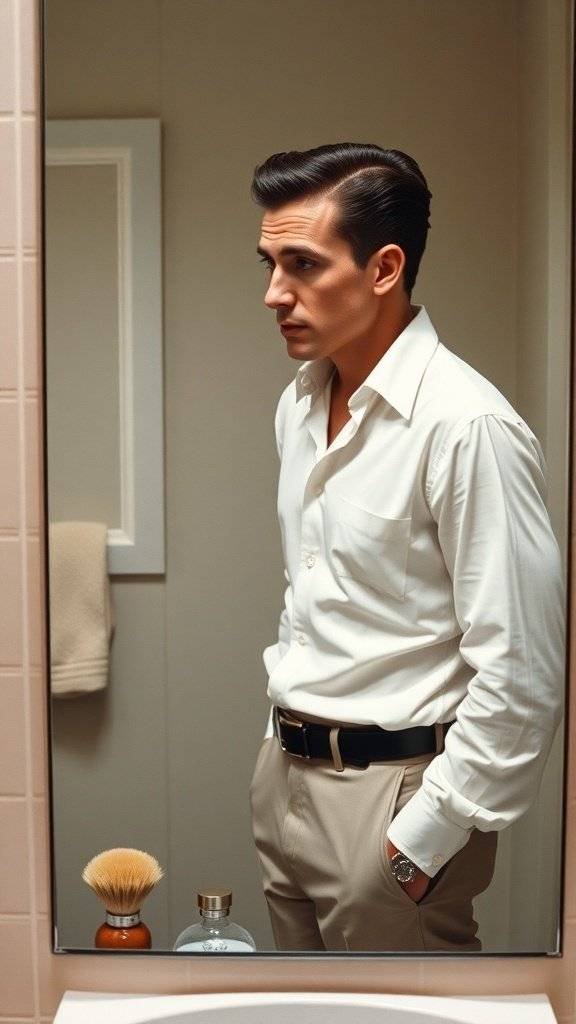
A white shirt, khaki trousers and a plain black belt. Note how the shirt sits close without pulling at the buttons.

Pale blue is the second color to own, here with gray trousers, a brown belt and no tie: right for a desk or a studio.
- Fit: The shoulder seam should sit at the edge of your shoulder, the collar should close with room for two fingers, and the cuff should reach your wrist bone. A slim or tailored cut gives the trim 60s line without strain across the chest.
- Buy: Look for a soft roll on button-down collars and a sturdy oxford weave. oxford cloth button-down shirts (paid link) come in slim cuts in most sizes; buy white and light blue before stripes.
- Care: Wash cool to warm, take out collar stays first, and hang to dry. Iron while slightly damp for crisp collars and cuffs.
- Wear it: Oxford button-downs with chinos, knitwear and casual jackets. The smooth white shirt with the suit, a slim tie and anything after dark.
2. Flat-Front Trousers in Gray and Khaki
Most slim early 60s trousers were flat-fronted, sat higher on the waist than most modern low-rise pants, and narrowed toward a short hem. Mid-gray wool and khaki cotton cover nearly every outfit in this list.

Tonal khaki shows how cleanly a flat-front trouser falls. The short hem barely touches the shoes, which keeps the line long.

White trousers with a soft open-collar shirt are the warm-weather, resort version.
- Fit: Choose a rise that sits at or just below your navel, a seat that does not sag, and a leg that tapers to a narrow opening. Hem with no break or only a slight break, so the cuff just kisses the shoe.
- Buy: flat-front slim chinos (paid link) handle the khaki slot. For gray, look for wool or a wool blend in a light flannel for fall. Check the inside back seam: extra fabric there lets a tailor adjust the waist later.
- Care: Hang wool trousers by the hem or fold over a hanger bar, and let them rest a day between wears. Press wool through a damp cloth to avoid shine. Wash cotton chinos inside out.
- Wear it: Gray with the sport coat, every knit and the overcoat. Khaki with the oxford, the cardigan, the corduroy jacket and loafers.
3. The Charcoal or Mid-Gray Suit
If you own one suit from this list, make it a slim, single-breasted gray suit with narrow lapels. It is the Mad Men suit and the Ivy suit at once, and it also breaks up into a jacket and trousers you can wear separately.
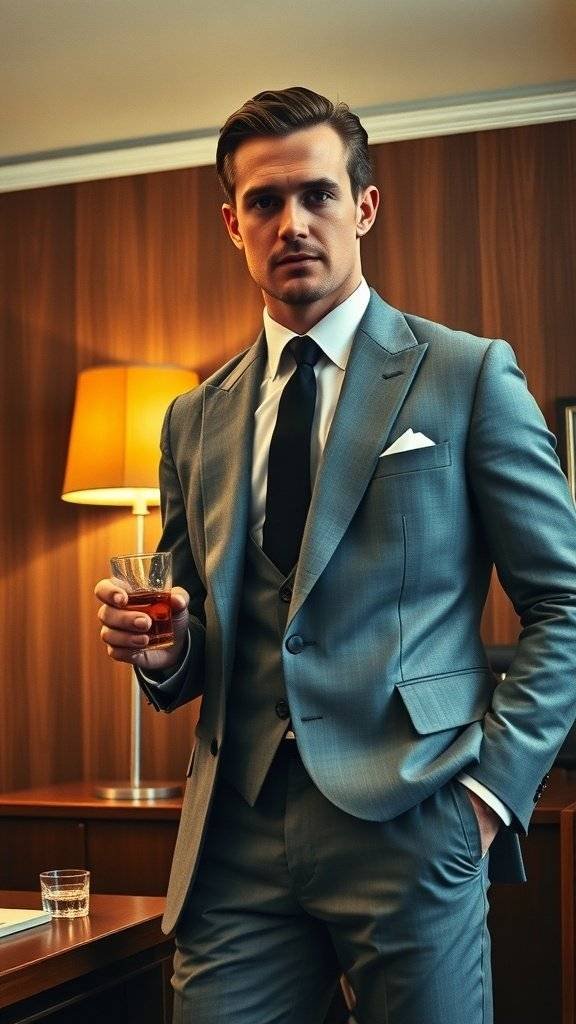
A blue-gray three-piece with a skinny black tie and white pocket square. The vest is optional.

Navy is the alternative if you already own gray, here as classic office wear with a patterned tie.
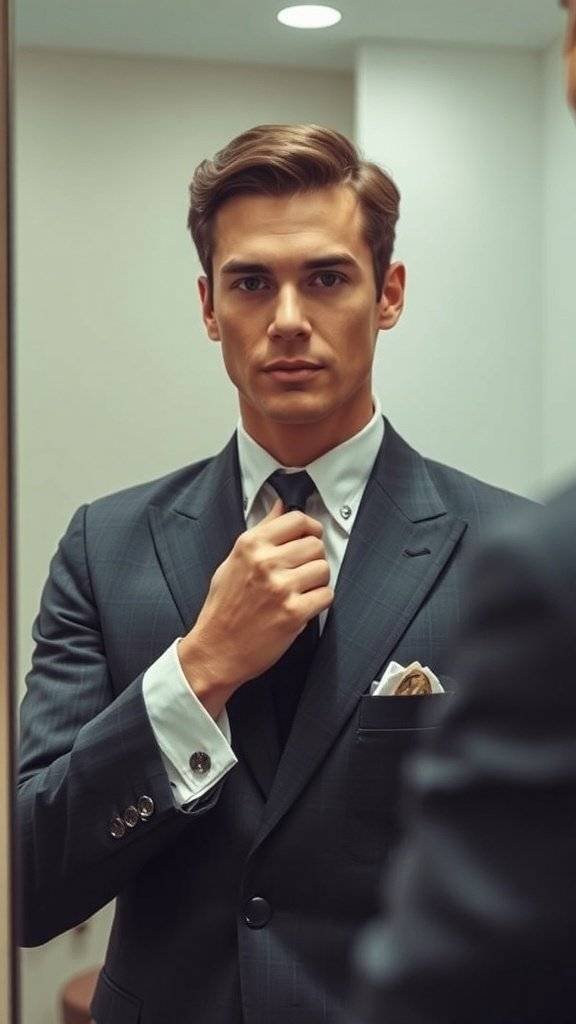
Charcoal is the most useful shade of all: dressy enough for evenings and weddings, plain enough for work.
- Fit: The shoulder seam should end at your shoulder bone with no dent below it. Buttoned, the jacket should lie flat without an X of creases. Let about a quarter to half an inch of shirt cuff show. Slim 60s jackets often sat a little shorter than older styles, roughly covering the seat.
- Buy: Choose worsted wool in a weight you can wear most of the year, with lapels about as narrow as the tie you plan to wear. Two or three buttons both suit the period.
- Care: Brush after wearing, rest it a day, and hang it on wide-shoulder wooden suit hangers (paid link) so the shoulders keep their shape. Steam out wrinkles and dry clean only for stains or after many wears.
- Wear it: Work, weddings, holiday parties, a Halloween costume, and the jacket alone over a roll-neck.
4. The Slim Tie, Tie Bar and Pocket Square
Small pieces, big effect. Early 60s ties were narrow, commonly around 2 to 2.5 inches wide, much slimmer than the roughly 3 inches or more of many modern ties. A plain white pocket square folded straight across, often called the TV fold or presidential fold, finished the look.

Jacket off, sleeves rolled, the slim tie still keeps a white shirt looking deliberate.
- Fit: Match tie width to lapel width. Tie it so the tip reaches your belt buckle. A tie bar should be no wider than the tie and sit between the third and fourth shirt buttons.
- Buy: skinny ties (paid link) in black, navy, charcoal and one subtle pattern cover most needs. Add one or two tie bars (paid link) and a few white cotton pocket squares (paid link).
- Care: Untie ties fully after wearing and roll or hang them so creases relax. Wash cotton pocket squares with shirts and press flat.
- Wear it: Ties with the suit and the white shirt. Pocket squares with any jacket, including the sport coat with an open collar.
Round Two: October Knitwear
5. The Black Roll-Neck
The fine-knit roll-neck, or turtleneck, became a signature of the Mods and of beatnik and artistic circles, worn on its own or under a jacket instead of a shirt and tie. It is the simplest way to look 60s with almost no effort.
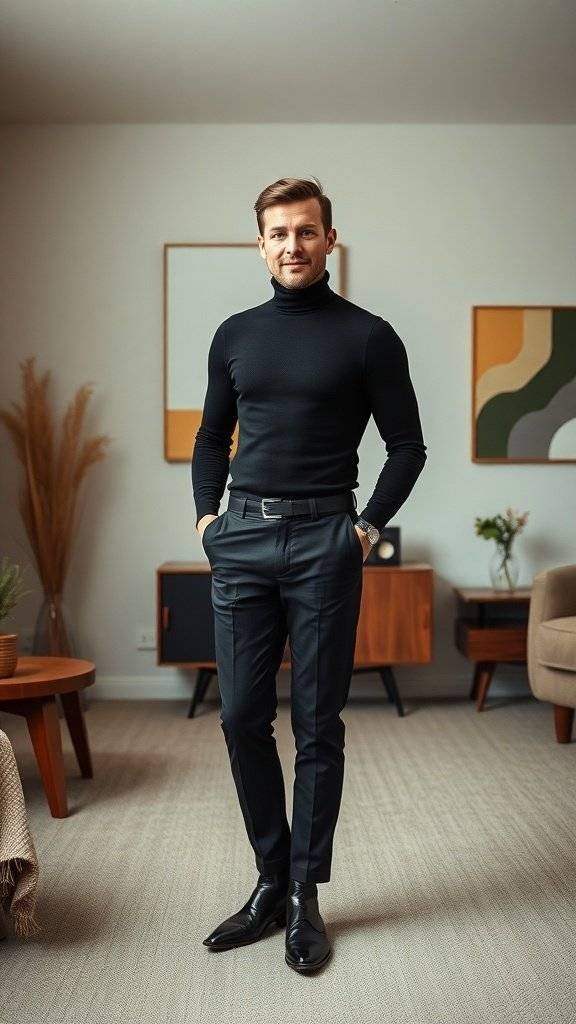
All black, tucked in, with a belt and boots. A roll-neck needs a slim, fine knit to look this clean.
- Fit: Choose a fine gauge that tucks in without bunching, with sleeves that end at the wrist. The neck should fold once and sit snug but not tight.
- Buy: merino roll-necks (paid link) are warm, light and easy to layer. Black first, then charcoal or navy.
- Care: Hand wash cool or use a wool cycle if the label allows, press the water out in a towel and dry flat. Fold, never hang.
- Wear it: Under the suit jacket or overcoat, with gray trousers for dinner, or alone with chinos on weekends.
6. The V-Neck Sweater Over a Collar
A lambswool or Shetland sweater over a collared shirt was a campus staple of the Ivy look. The V-neck lets the collar show and works with or without a tie.

Burgundy over a white collar with tan trousers: a fall palette that suits October leaves and needs nothing extra.
- Fit: It should finish around the belt line, not below it, and skim the body without clinging. The shirt collar should lie flat inside the V.
- Buy: lambswool V-neck sweaters (paid link) in burgundy, navy, camel or bottle green add color to a mostly neutral capsule.
- Care: Fold flat with tissue between folds. De-pill gently with a sweater comb. Store clean, since moths are drawn to worn, unwashed wool, and add cedar to the drawer.
- Wear it: Over the oxford with chinos, under the corduroy jacket, or over the white shirt and tie for a relaxed office day.
7. The Cardigan
Cardigans were everyday wear for men in the 60s, worn over a shirt and tie in place of a jacket or as weekend wear at home. Plain button-front versions in gray or navy are the most useful.
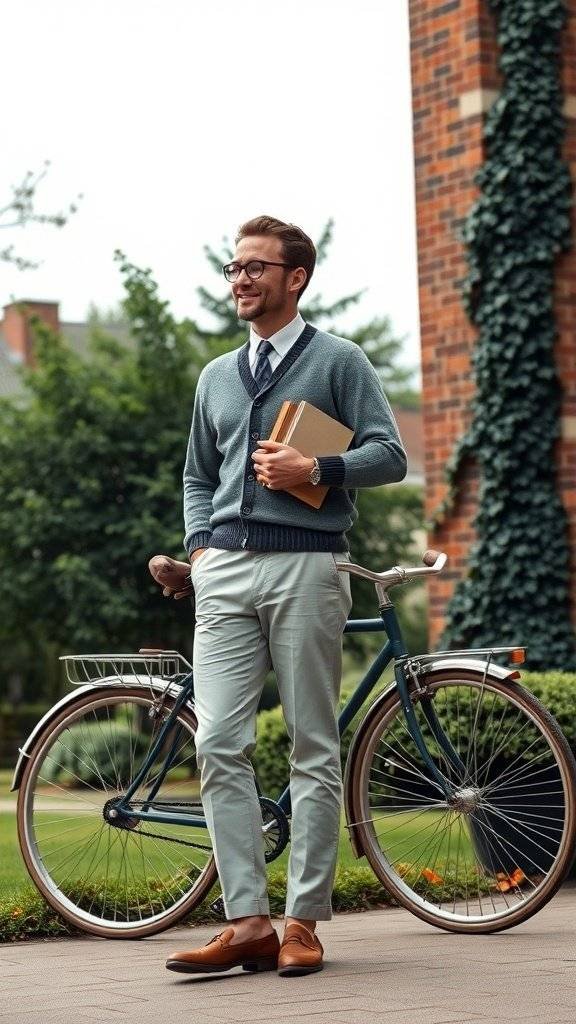
Gray cardigan, shirt and tie, light gray trousers and brown loafers: the full Ivy campus look.
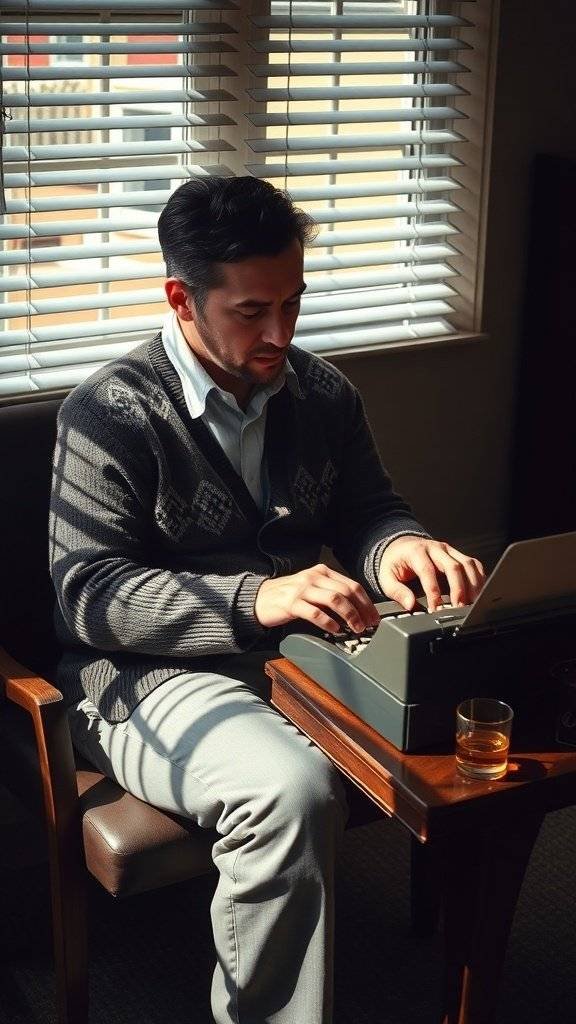
A patterned cardigan over a white collar is casual but tidy.
- Fit: Buttoned, it should lie flat without pulling, and the hem should sit at or just below the belt. Leave the bottom button open.
- Buy: button wool cardigans (paid link) in a medium gauge hold their shape. Five or six buttons and ribbed cuffs are the classic details.
- Care: Same as the V-neck: cool wash, dry flat, fold. Check buttons at the start of each season.
- Wear it: With a tie on desk days, open over a white shirt at home, or under the overcoat on cold days.
Round Three: Coats for Wind, Rain and Weekends
Three outer layers carry the capsule from fall into winter. Buy the overcoat first if your winters are cold, the raincoat first if they are wet.
8. The Wool Overcoat
A knee-length overcoat in camel, charcoal or navy went over the suit for travel and business. Double-breasted styles, including the navy-born peacoat, look sharp over a roll-neck.
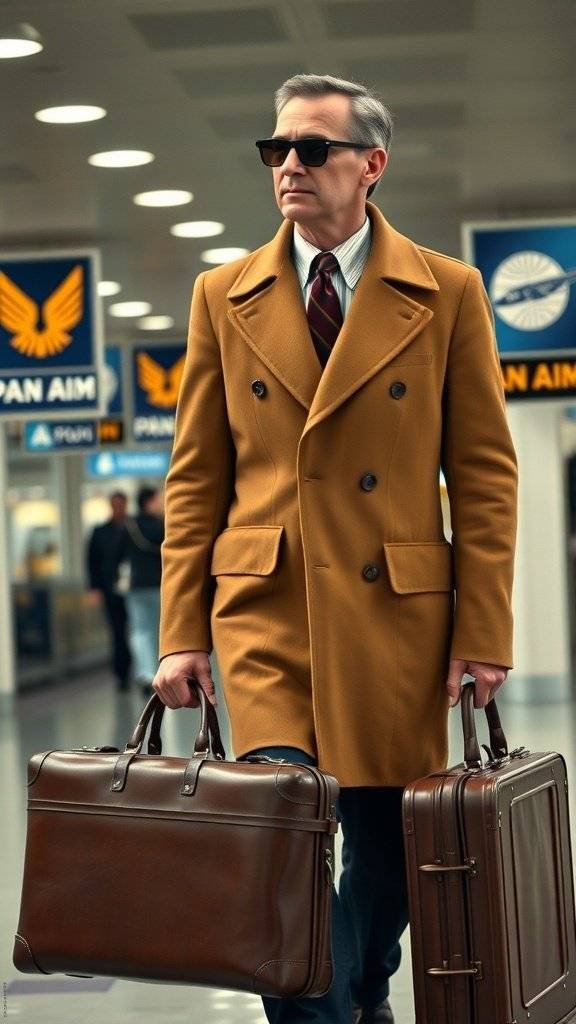
Camel over a suit and tie: the jet-age traveling look, and a lift for a gray winter wardrobe.
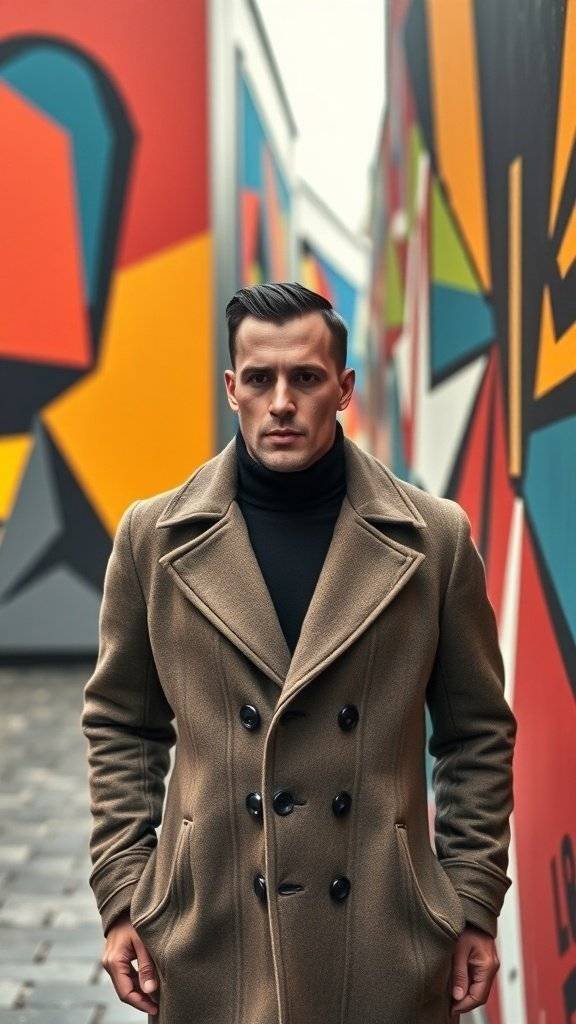
A double-breasted wool coat over a black roll-neck is the sleeker option. Turn the collar up against the wind.
- Fit: Try coats on over a suit jacket or a thick sweater. The shoulders should sit just past your own and the sleeve should cover your shirt cuff. Length at or just above the knee suits slim trousers.
- Buy: double-breasted wool overcoats (paid link) in a heavy wool or wool and cashmere blend last for years. Check the lining and buttons before buying.
- Care: Brush after wearing, hang on a broad wooden hanger and let it dry fully if it gets wet. Professional cleaning once a season is plenty.
- Wear it: Over the suit for work and evenings, over the roll-neck or cardigan on weekends.
9. The Raincoat or Trench
A light raincoat in khaki or tan was standard for city men in the 60s. The single-breasted version, often called a mac, is the cleaner, slimmer choice. A belted, double-breasted trench also works if you like more drama.

A tan raincoat, dark trousers and an umbrella. Simple and practical on a wet city night.
- Fit: Size it to go over a suit jacket. The hem should hit around the knee, and the sleeves should cover your jacket cuff.
- Buy: single-breasted raincoats (paid link) in cotton gabardine or a coated cotton blend shed rain and breathe. Look for a fly front that hides the buttons.
- Care: Spot clean, hang to dry, and avoid hot dryers that can damage the coating.
- Wear it: Rainy days over the suit or over knitwear and chinos. It also works as a light fall coat.
10. The Casual Jacket: Corduroy, Suede or Leather
Weekend jackets of the period ranged from corduroy and suede to the leather jacket carried over from the 1950s. Pick one first, based on the climate where you live and how you spend your free time.
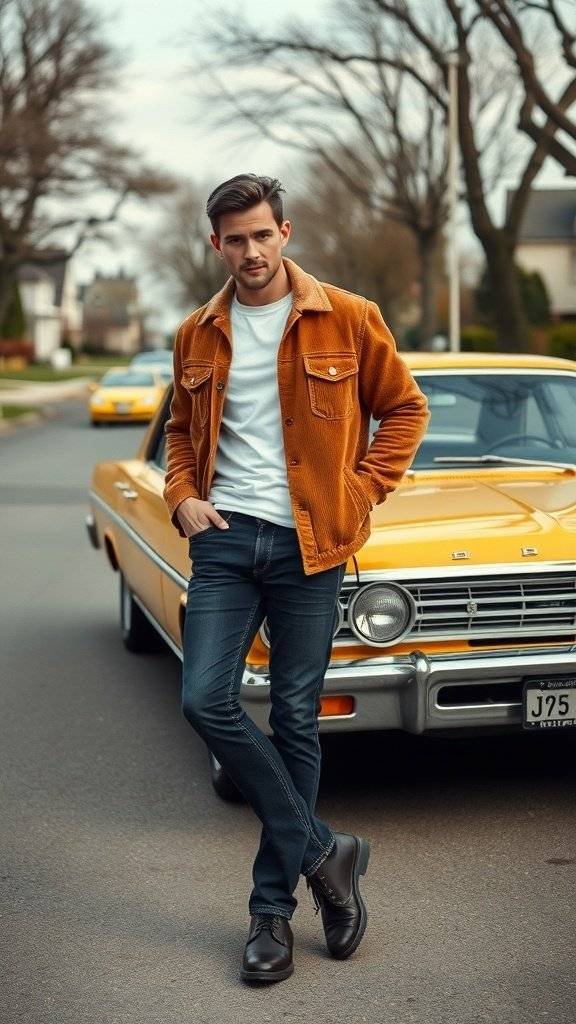
Rust corduroy over a white tee with dark jeans: warm, textured and easy.
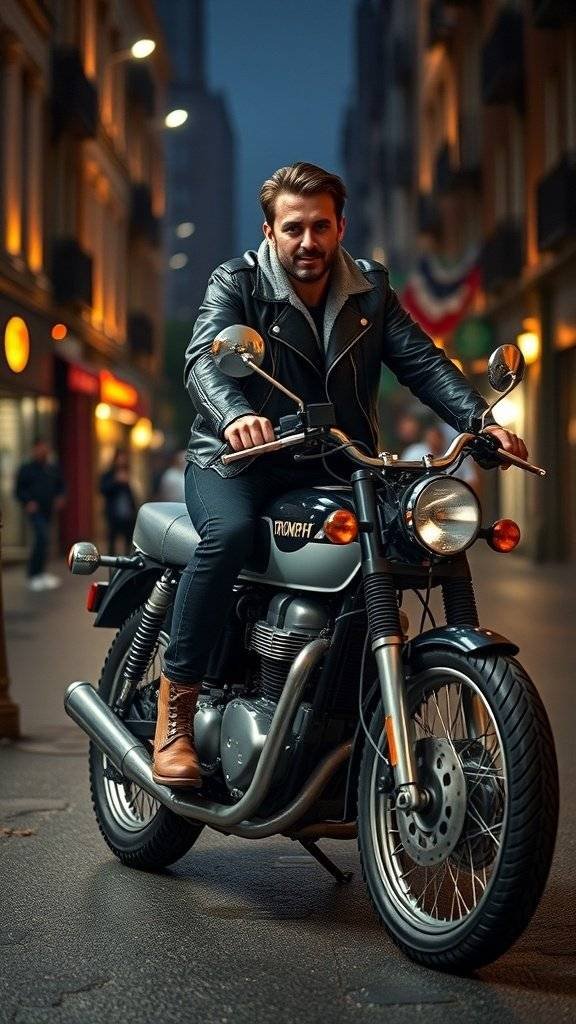
Black leather and jeans: the rebel look carried on from the 50s.

Brown leather reads warmer and friendlier than black.
- Fit: Casual jackets should end near the belt. Arms should move freely without the hem riding up past your waist.
- Buy: corduroy trucker jackets (paid link) are the easiest to wear. For leather or suede, check the seams, lining and zips closely if buying vintage.
- Care: Brush corduroy with the grain, wash it inside out on cool, and skip the hot dryer. Treat suede with a protector spray and keep suede brush and eraser kits (paid link) on hand. Condition leather once or twice a year.
- Wear it: Weekends with jeans or chinos, over the V-neck sweater, or with a roll-neck for an evening out.
Round Four: Weekend Shirts and a Second Jacket
11. The Short-Sleeve Camp or Gingham Shirt
Short-sleeve shirts with a flat camp collar, in prints, gingham or solids, were everywhere in the warm months, from backyards to beaches. They are the relaxed counterpart to the oxford.

Blue gingham with cream trousers and loafers. The sleeves stop at mid-bicep.

A floral print with rolled trousers at the beach, true to the era’s leisure wear.

A plain pale blue version with jeans is the one you will wear most.
- Fit: The sleeves should end mid-bicep and the hem should be straight and short enough to wear untucked, around the middle of your fly.
- Buy: camp collar shirts (paid link) in rayon, cotton or linen. Start with a solid or a small gingham, then add a print.
- Care: Wash cool, hang dry, and press rayon on low heat with a cloth between it and the iron.
- Wear it: Weekends and vacations with chinos, white trousers or jeans. Under the corduroy jacket on cool evenings.
12. The Sport Coat or a Light Summer Suit
A patterned sport coat or a tan suit gives you a second jacket that is not as formal as the gray suit. Checks such as houndstooth suited the period, and light tan suits were a summer standby.
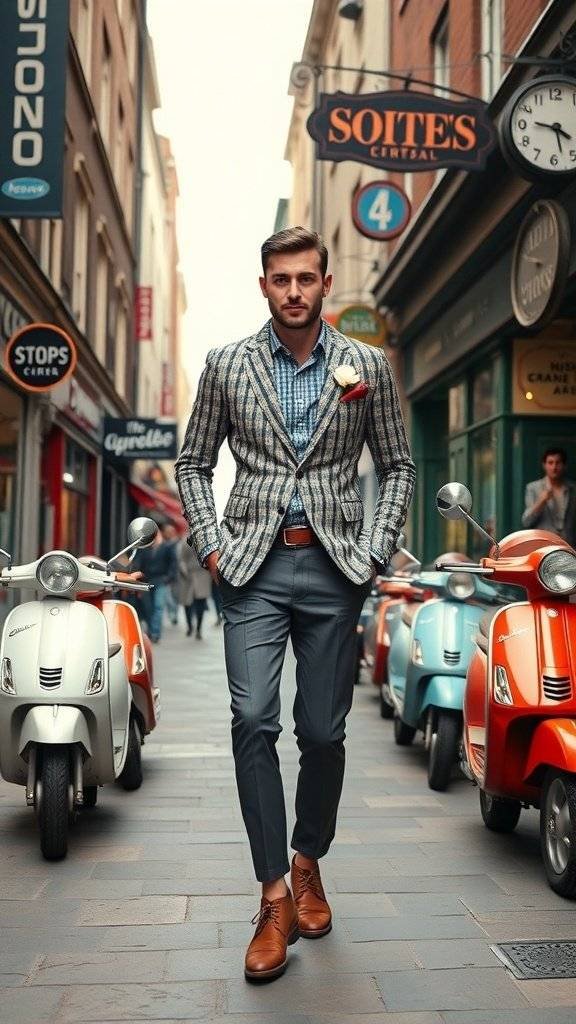
A checked sport coat over a chambray shirt with gray trousers and brown shoes. No tie, still sharp.
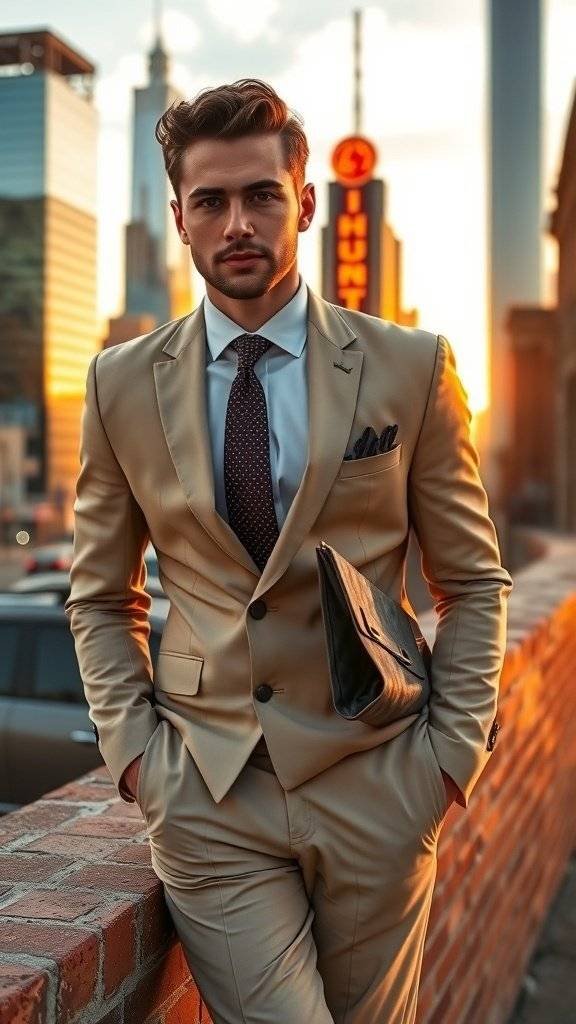
A tan suit with a pale blue shirt and burgundy tie. Split it up outside summer.
- Fit: Same rules as the suit: clean shoulders, flat front, quarter to half inch of cuff. A sport coat can be a touch roomier to fit over knitwear.
- Buy: Look for a check in gray, brown or blue, or a tan suit in cotton, linen or lightweight wool.
- Care: As with the suit: brush, rest and steam. Linen wrinkles easily, so expect some creases.
- Wear it: With chinos and an oxford, over a roll-neck, or for daytime weddings and parties.
The Shoes That Hold It All Together

Burgundy loafers with a dark suit, worn open-collared at a jazz club. Shoes made a 60s outfit, and four pairs cover the whole capsule:
- Penny loafers in brown or burgundy. The Ivy shoe. leather penny loafers (paid link) go with chinos, gray trousers and even a casual suit.
- Chelsea boots with an elastic side panel, in black leather or brown suede. The Mod boot, and a good match for slim trousers. Try suede Chelsea boots (paid link).
- Desert or chukka boots in tan suede for weekends with jeans and corduroy.
- Black plain-toe or cap-toe oxfords for the suit, work and evenings.
Classic rule of the period: match socks to trousers rather than shoes so the leg looks long. Rotate pairs, use cedar shoe trees and polish leather before it looks dry.
Off-Duty Extras
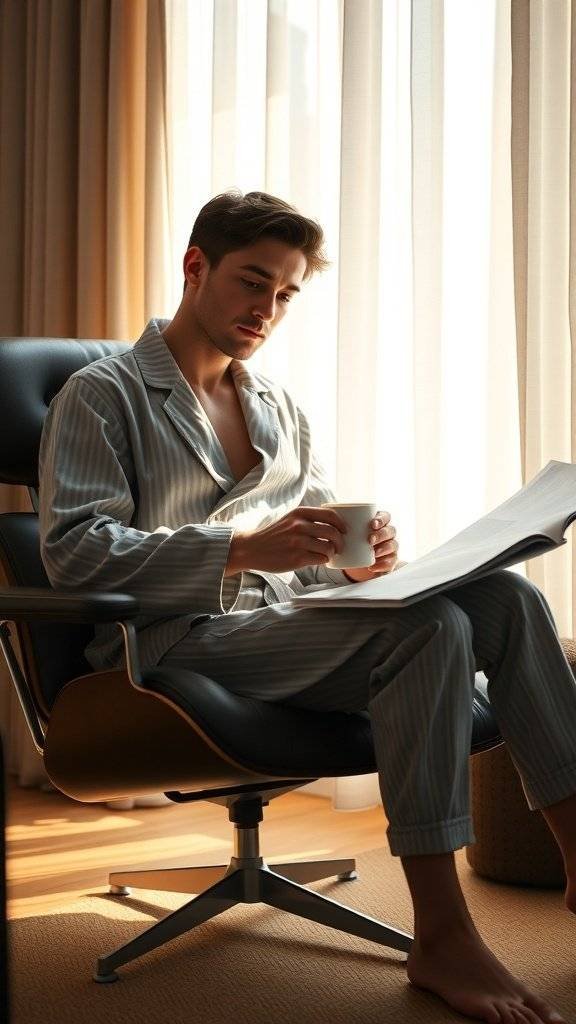
Striped pajamas in cotton or flannel, with a robe, complete the at-home side of a 60s wardrobe. If the bedroom needs the same treatment, see our Gotham-inspired bedroom decor for men.
How the 12 Pieces Combine
Six outfits from the capsule:
- Office: gray suit, white shirt, slim tie, TV-fold pocket square, black oxfords.
- Campus or casual Friday: oxford button-down, gray cardigan, khaki chinos, penny loafers.
- Dinner out: suit jacket over a black roll-neck, gray trousers, Chelsea boots.
- Cold commute: overcoat over the suit or over the V-neck and chinos.
- Weekend: corduroy jacket, white T-shirt, dark jeans, desert boots.
- Warm Saturday: gingham camp shirt, white trousers, loafers.
For more relaxed ideas built from the same pieces, see our 18 retro 1960s men’s casual fashion ideas, and for layering tips that suit the Ivy look, try layering ideas for preppy outfits.
Fit Notes for Slim 1960s Cuts
Slim does not mean tight. A good 60s fit follows the body closely with room to move. Before you pay for anything, check these points:
- Shoulder seams end at your shoulder bone. Shoulders are the hardest part to alter, so get this right first.
- Buttoned jackets lie flat with no X-shaped pulling at the button.
- Sleeves show a quarter to half inch of shirt cuff.
- Trousers sit higher than modern low-rise pants and taper to a short hem with little or no break.
- Shirts and knits tuck in without ballooning over the belt.
Easy alterations: hemming trousers, tapering a leg, taking in a waist, shortening jacket sleeves without working buttonholes, and slimming a shirt. Hard or not worth it: shoulders, jacket length, lapel width, and letting out beyond the fabric left in the seams. Buy for your shoulders and chest, then let a tailor handle the rest.
Buying Vintage 1960s Menswear Without Regret
Real 60s pieces are out there, but tag sizes vary across decades and brands. Shop with measurements, not size labels:
- Measure a garment that fits you well: jacket chest pit to pit, shoulder width seam to seam, sleeve length, and back length from the collar seam. For trousers, waist, rise, inseam and leg opening.
- Ask for the same measurements from online sellers and compare them to yours.
- Hold wool up to the light to spot moth holes, and check underarms, collars and cuffs for stains and worn fabric.
- Check inside: linings, pocket bags, zips and the seam allowance at the back of trousers.
- Mustiness often airs out with time and steaming. A strong mothball smell can linger.
New pieces cut in a slim, 60s style are often easier for basics like shirts and knitwear. Vintage shines for coats and suits.
A Halloween Costume From Pieces You Will Keep
A 60s costume does not need to come from a costume shop. Each of these is built from the capsule:
- Mad Men executive: gray suit, white shirt, skinny black tie, TV-fold pocket square, tie bar, side part with pomade, and an old fashioned glass as a prop. The show is set from 1960 to 1970, so the early seasons are the ones to copy. Our Mad Men 1960s style guide has more ideas.
- London Mod: slim dark suit or black roll-neck, Chelsea boots, and a fishtail parka over the top if you have one.
- Ivy student: oxford button-down, cardigan or V-neck, chinos, loafers and an armful of books.
- Rebel rider: leather jacket, white T-shirt, dark jeans and boots.
Hosting? Serve Mad Men vintage appetizers and save the Christmas cocktails from the Mad Men era for December. For more costume ideas see our Halloween costume ideas.
Dress the Next Party, Too
When the suit gets its next big night out, our printable Twelve Bells New Year’s Eve Party Kit on Etsy brings invitations, cocktail and mocktail cards and a countdown clock to a 60s-style New Year’s Eve. You will find more printable party kits in our shop.
Disclaimer: This post is inspired by the 1960s and by the series Mad Men, for entertainment and styling ideas only. Mad Men and related names belong to their respective rights holders. This post is not affiliated with or endorsed by AMC or Lionsgate.
Want more from Inspired Realms? Dress your room with Gotham bedroom decor for men, bake Gatsby dessert recipes, 1920s Christmas desserts or dark Halloween desserts, mix Roaring 20s punch next to Mad Men vintage appetizers, Gatsby-inspired entrees, gothic hors d’oeuvres, tiny Coruscant gala bites, Coruscant nightclub small plates and Star Wars dinner recipes, and borrow ideas from Star Wars-inspired bars. Around the house, try vintage Gatsby Christmas decorations, lavish 1920s bathroom ideas, Gatsby bathroom decor, Gotham kitchen wallpaper, hand-painted furniture, vintage hand-painted furniture and backyard play spaces, and for her side of the party, see Gatsby cocktail dresses, sequin mini dresses, Roaring 20s party accessories, Star Wars wedding dresses and Gotham villain wedding dresses, or find printable kits in the Inspired Realms shop.