

Home veggie patches and flower gardens inspired by the 1920s bring a touch of historical charm and practicality to any backyard. This era celebrated self-sufficiency and the joy of growing your own food amidst gorgeous blooms. With simple tips, you can dive into growing fresh veggies like tomatoes and cucumbers, while also planting vibrant flowers that attract pollinators. Incorporating these elements can enhance your home cooking – try whipping up a classic garden salad with your fresh produce or using flowers to garnish dishes for a beautiful, nostalgic presentation.
Vertical Gardening Inspired by the Past
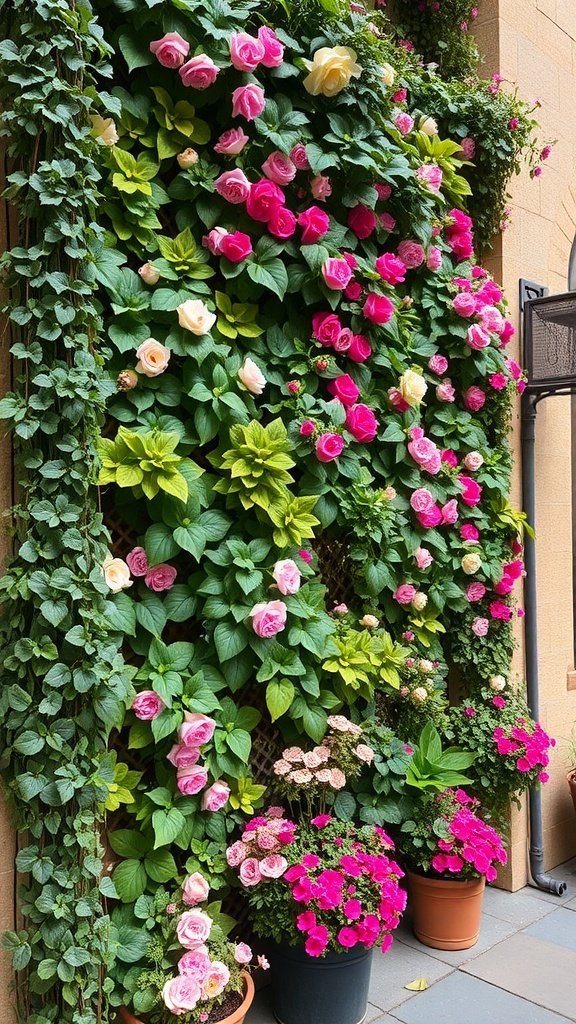
Vertical gardening brings a charming touch to any home veggie patch or flower garden. Inspired by the 1920s, this style uses walls and fences to grow plants upward, saving space while adding beauty. The image shows vibrant pink flowers cascading over a brick wall, creating a stunning visual effect.
Incorporating vertical gardening can be a fun way to enhance your outdoor space. You can use trellises, wall planters, or even repurpose old pallets to create a vertical garden. This method not only looks great but also allows you to grow more plants in smaller areas.
When it comes to what to cook from your garden, consider using fresh herbs and vegetables. Basil, tomatoes, and peppers are perfect for summer salads or homemade sauces. You can also use edible flowers from your vertical garden to add a pop of color to your dishes. Try tossing them into a salad or using them as a garnish for drinks.
Garden Paths with a Retro Twist
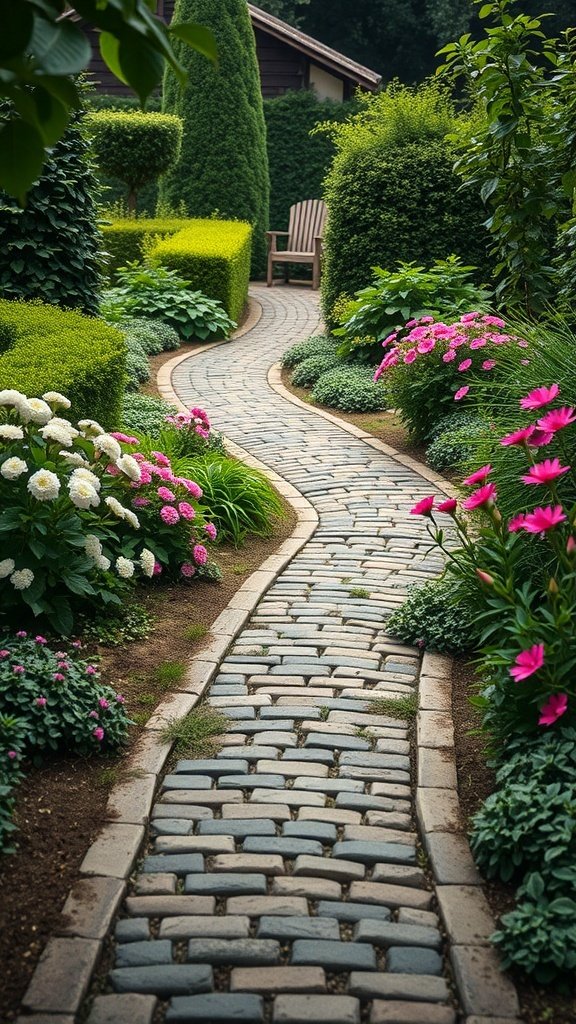
Garden paths can add charm and character to any outdoor space. Inspired by the 1920s, these paths often feature winding designs and natural materials. The image showcases a beautiful stone pathway, surrounded by lush greenery and vibrant flowers. The soft curves of the path invite you to explore the garden, making it feel like a serene retreat.
Incorporating home veggie patches along these paths can enhance the garden’s appeal. Imagine walking past rows of tomatoes, peppers, and herbs, all thriving in your backyard. This blend of flowers and vegetables creates a lively atmosphere, perfect for enjoying the outdoors.
When it comes to cooking from your garden, fresh ingredients are key. Use your home-grown herbs to season dishes like grilled chicken or roasted vegetables. Toss a handful of cherry tomatoes into a salad for a burst of flavor. You can even create a simple pesto with basil, garlic, and olive oil, perfect for pasta or sandwiches. These ideas make it easy to enjoy the fruits of your labor while savoring the beauty of your garden.
Vintage Garden Tools and Accessories
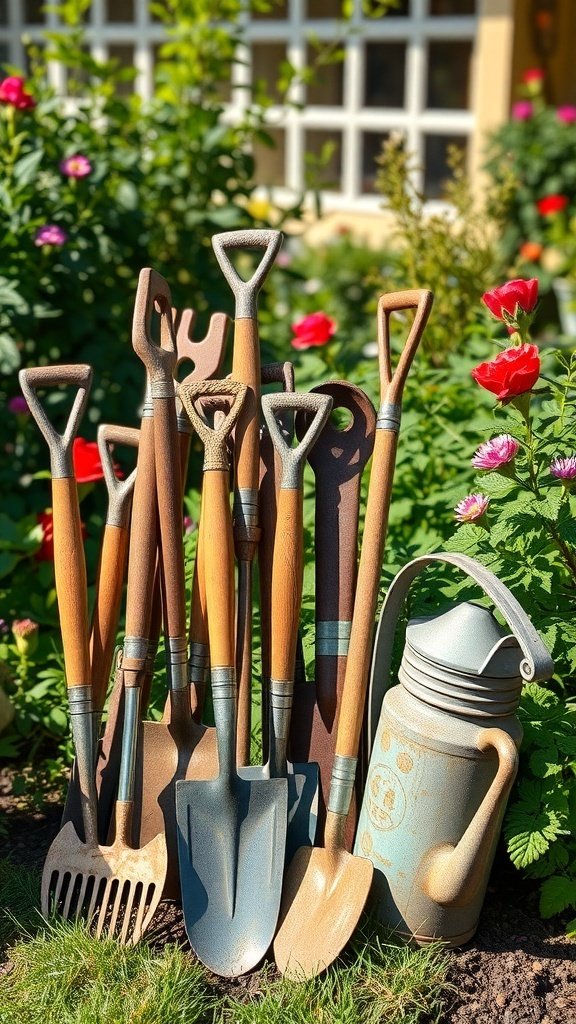
When you think of vintage garden tools, images of sturdy shovels, rakes, and watering cans come to mind. The tools in the image capture that essence perfectly. With their wooden handles and worn metal, they tell stories of countless gardening days spent nurturing home veggie patches and flower gardens.
These tools are not just functional; they add charm to any garden space. The rustic look complements the vibrant flowers surrounding them, creating a delightful scene. Using vintage tools can make gardening feel more connected to the past, reminding us of simpler times when gardening was a daily routine.
For those looking to cook from their gardens, consider using fresh herbs and veggies. Basil, tomatoes, and zucchini are great choices for summer dishes. A simple pasta with sautéed zucchini and fresh basil can be a delightful meal. Or, try a fresh salad with tomatoes and herbs straight from your home veggie patch. The flavors are unbeatable!
Flower Choices for a 1920s Garden
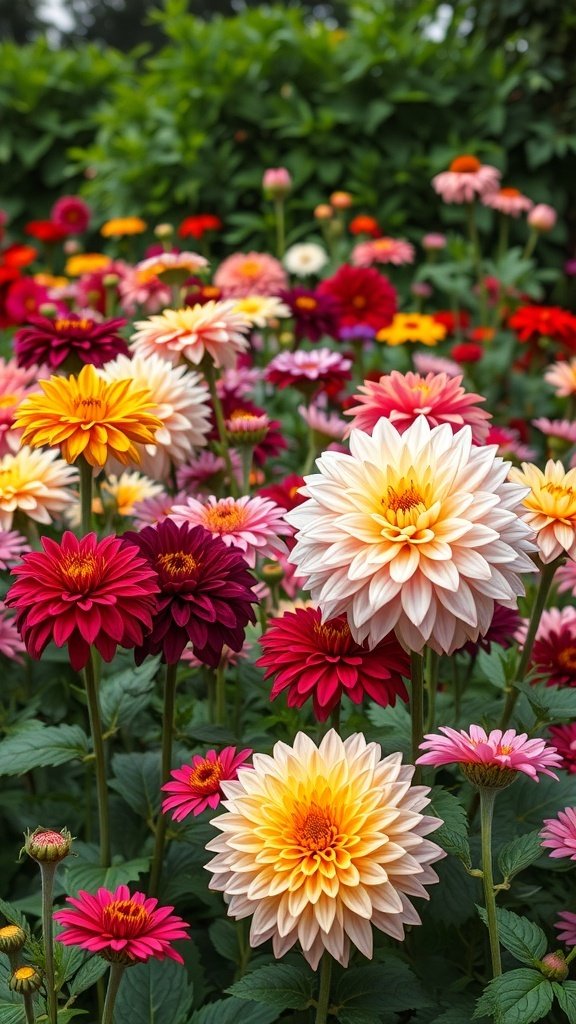
When thinking about a 1920s garden, flowers play a big role in capturing that vintage charm. Bright and bold blooms were popular during this era, and they can easily transform your outdoor space into a delightful retreat.
Dahlias are a fantastic choice. Their large, vibrant blooms come in various colors, making them a perfect centerpiece for any garden. You can plant them alongside zinnias, which were also favored in the 1920s. These cheerful flowers add a splash of color and are easy to grow.
Another lovely option is the cosmos. Their delicate petals sway gently in the breeze, adding a whimsical touch. These flowers thrive in sunny spots, making them ideal for home veggie patches as well.
Don’t forget about marigolds! They not only bring a pop of orange and yellow but also help keep pests away from your veggie patches. Plus, they’re easy to care for, making them a great choice for beginners.
Now, if you’re wondering what to cook with your home-grown veggies, consider a fresh garden salad. Toss together some lettuce, tomatoes, and cucumbers, and add a handful of edible flowers for a colorful twist. You can also make a simple vegetable stir-fry with whatever you harvest. Just sauté your veggies with a bit of garlic and olive oil for a quick and tasty meal!
Art Deco Garden Design Elements
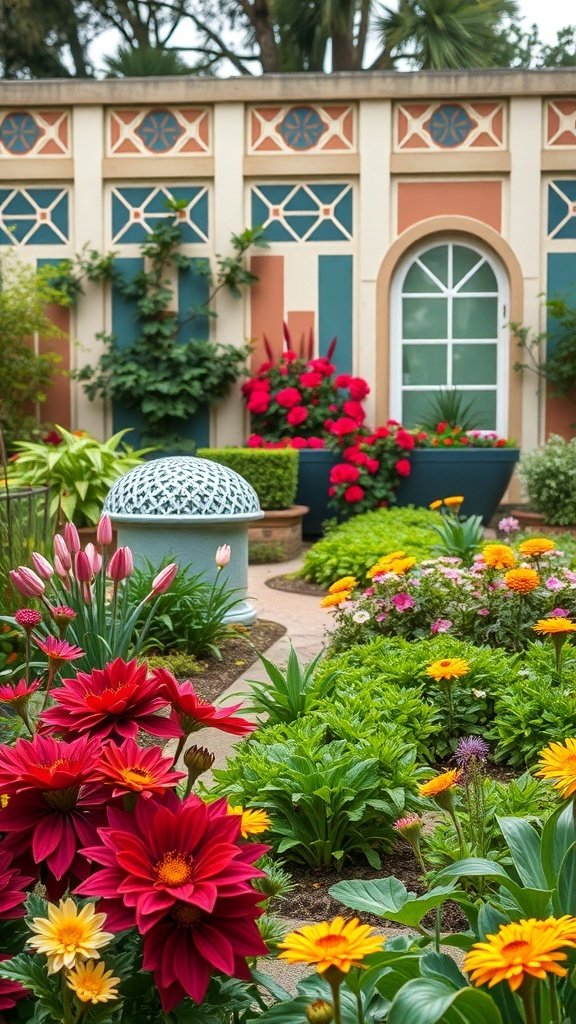
The image showcases a vibrant garden filled with colorful flowers, reflecting the Art Deco style that flourished in the 1920s. The bold colors and geometric patterns in the garden’s layout are reminiscent of this iconic design movement. The combination of rich reds, yellows, and greens creates a lively atmosphere, perfect for a home veggie patch or flower garden.
Art Deco gardens often feature symmetrical designs and structured layouts, which can be seen in the arrangement of the flowers and plants. The use of decorative elements, like the unique garden ornament in the foreground, adds a touch of elegance. This style encourages creativity, making it a great inspiration for anyone looking to enhance their outdoor space.
For those with home veggie patches, consider planting vibrant vegetables like rainbow chard or heirloom tomatoes. These can add color and flavor to your meals. Fresh herbs like basil and parsley are also easy to grow and can elevate any dish. Try tossing some freshly picked veggies into a simple stir-fry or salad for a delightful garden-to-table experience.
Heirloom Vegetable Varieties
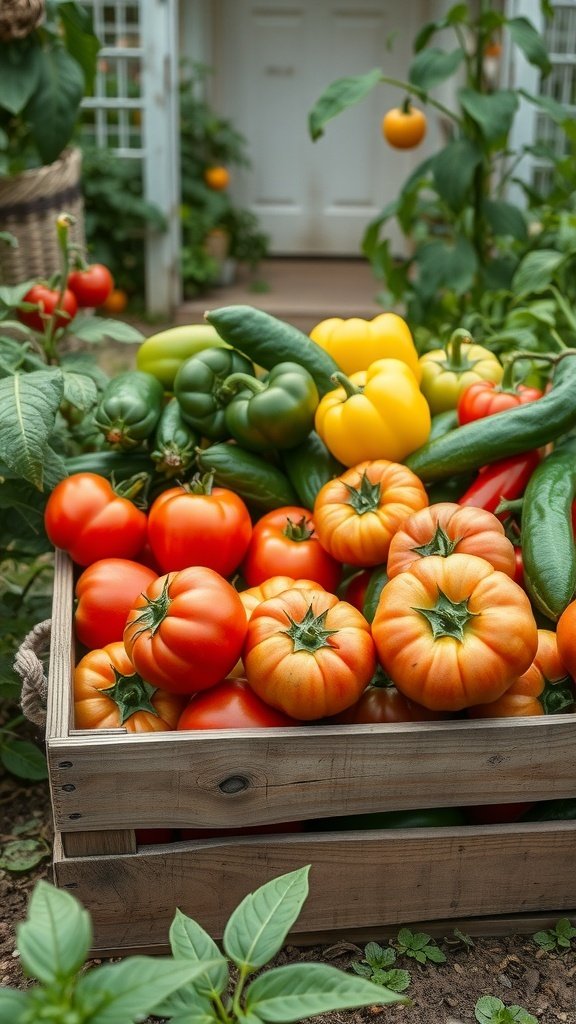
Heirloom vegetables bring a touch of history to home veggie patches. These varieties have been passed down through generations, often boasting unique flavors and colors. In the image, you can see a beautiful collection of heirloom tomatoes, peppers, and cucumbers, all freshly harvested and ready to be enjoyed.
Growing heirloom varieties not only adds diversity to your garden but also connects you to the gardening traditions of the past. Each type has its own story and characteristics, making them special additions to your home veggie patch.
When it comes to cooking, these vibrant vegetables shine in many dishes. Try making a fresh tomato salad with basil and mozzarella for a simple yet delicious meal. Roasted peppers can be a great side dish, while cucumbers are perfect for refreshing summer salads. The possibilities are endless!
Raised Beds with Vintage Charm
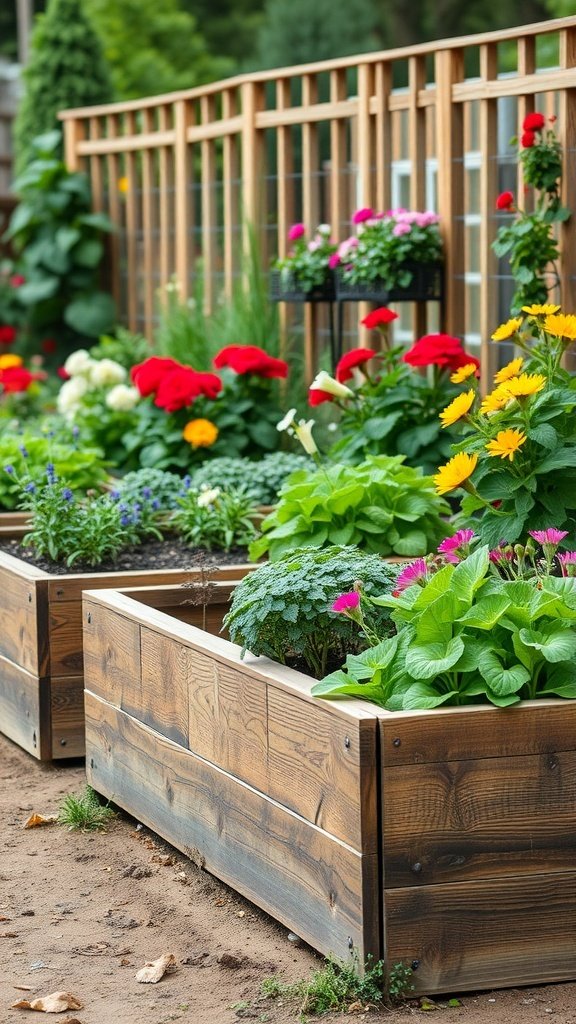
Raised beds bring a touch of vintage charm to any home veggie patch. These wooden boxes, often seen in gardens from the 1920s, are not just practical; they add character to your outdoor space. The rich, warm tones of the wood contrast beautifully with the vibrant flowers and lush greens that fill them.
In the image, you can see a lovely arrangement of colorful flowers alongside leafy veggies. This combination not only looks inviting but also creates a productive garden. Raised beds make it easier to manage plants, allowing for better drainage and soil control.
When planning what to cook from your garden, think about fresh salads or stir-fries. Leafy greens like lettuce and spinach are perfect for salads, while herbs like basil and parsley can elevate any dish. You can also use tomatoes and peppers for a delicious salsa or a hearty vegetable soup.
These raised beds are a great way to grow your own food while enjoying the beauty of flowers. Mixing veggies with blooms not only attracts pollinators but also makes your garden a delightful place to spend time. So, grab your gardening gloves and start planting!
Companion Planting Techniques
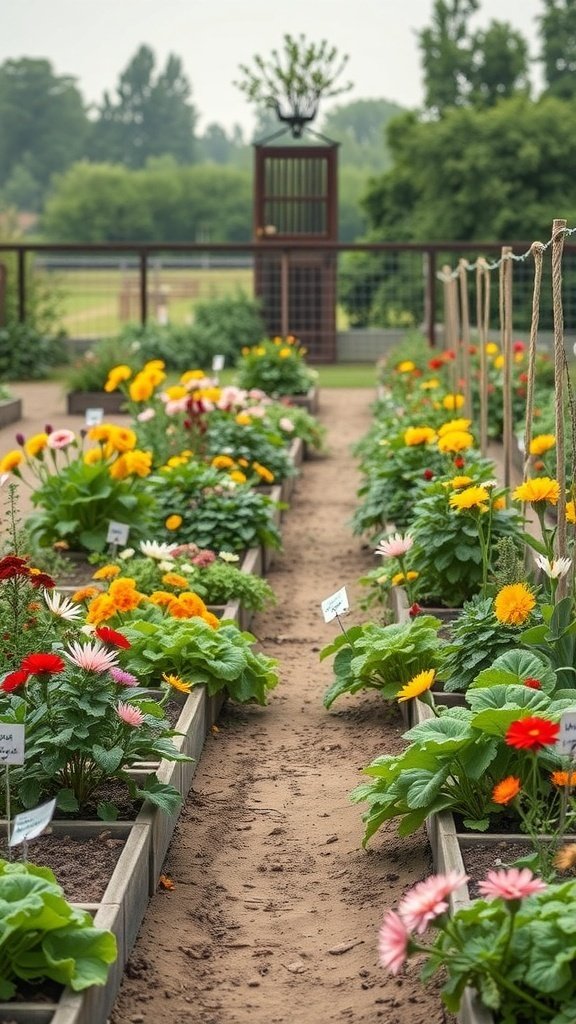
Companion planting is a fantastic way to make the most of your home veggie patches and flower gardens, especially when inspired by the charming styles of the 1920s. This method involves planting different crops close together to enhance growth, deter pests, and improve flavor. For instance, pairing tomatoes with basil not only helps the tomatoes thrive but also boosts the basil’s flavor.
In the image, you can see a vibrant garden filled with colorful flowers and healthy plants. These flowers can attract beneficial insects that help pollinate your veggies or keep harmful pests at bay. Marigolds are a popular choice for this purpose, as they repel nematodes and other pests.
When planning your garden, think about what plants work well together. For example, carrots and onions make great companions, as the onion’s scent can help deter carrot flies. Likewise, planting beans alongside corn can provide natural support for the corn while enriching the soil with nitrogen.
Now, let’s talk about what to cook from your garden! Fresh veggies like tomatoes, cucumbers, and peppers can be tossed into a refreshing salad. You can also whip up a simple ratatouille using zucchini, eggplant, and bell peppers. Don’t forget to use those fresh herbs like basil and parsley to elevate your dishes!
Traditional Garden Fencing Styles

When you think of a classic garden, a white picket fence often comes to mind. This style was popular in the 1920s and adds a charming touch to any home veggie patch or flower garden. The clean lines and bright color create a welcoming atmosphere, inviting you to step inside and enjoy the beauty of nature.
The image shows a lovely white fence, perfectly complementing the vibrant flowers and lush greenery behind it. This kind of fencing not only defines the space but also enhances the overall aesthetic of the garden. It’s a simple yet effective way to frame your plants and flowers, making them stand out even more.
For those looking to create their own garden oasis, consider planting colorful flowers alongside your home veggie patches. Roses and daisies can add a pop of color, while herbs like basil and parsley are perfect for cooking. You can easily whip up a fresh salad or a fragrant pesto using ingredients straight from your garden!
Garden Party Ideas with a 1920s Flair

Picture a lovely garden party inspired by the 1920s, where elegance meets nature. The image shows a beautifully set table outdoors, surrounded by lush greenery and vibrant flowers. The table is adorned with charming floral arrangements, sparkling glassware, and neatly folded napkins, creating a warm and inviting atmosphere.
To channel the spirit of the 1920s, think about incorporating vintage tableware and soft lighting. A lantern hanging above adds a nostalgic touch, perfect for evening gatherings. This setup not only celebrates the beauty of home veggie patches but also highlights the joy of sharing meals with friends and family.
When planning your menu, consider using fresh produce from your garden. You can whip up a delightful salad with mixed greens, tomatoes, and cucumbers. For a heartier option, roast some seasonal veggies like zucchini and bell peppers. Don’t forget to make a refreshing herb-infused lemonade using mint or basil from your garden!
Garden Seating Inspired by the Era
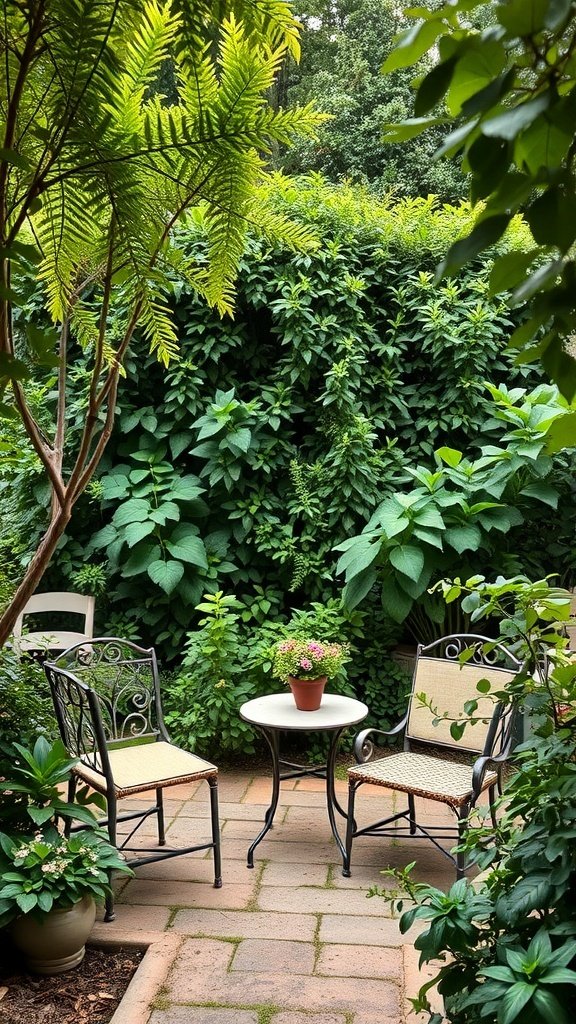
Imagine stepping into a cozy garden space that feels like a step back in time. The image captures a charming seating area, perfect for enjoying the beauty of home veggie patches and flower gardens. Two elegant chairs surround a small table, inviting you to sit and relax amidst lush greenery.
The design of the chairs reflects the 1920s style, with intricate metalwork and comfortable cushions. This kind of seating encourages leisurely afternoons spent sipping tea or enjoying a good book. The surrounding plants create a natural privacy screen, making it an ideal spot for quiet moments.
To make the most of your garden, consider what to cook from your veggie patches. Fresh herbs like basil and parsley can elevate any dish. Toss them into salads or use them to flavor roasted vegetables. If you have tomatoes, they’re perfect for a simple pasta sauce or a fresh salsa. And don’t forget about zucchini—grill it or add it to stir-fries for a tasty treat!
Color Palettes from the Roaring Twenties
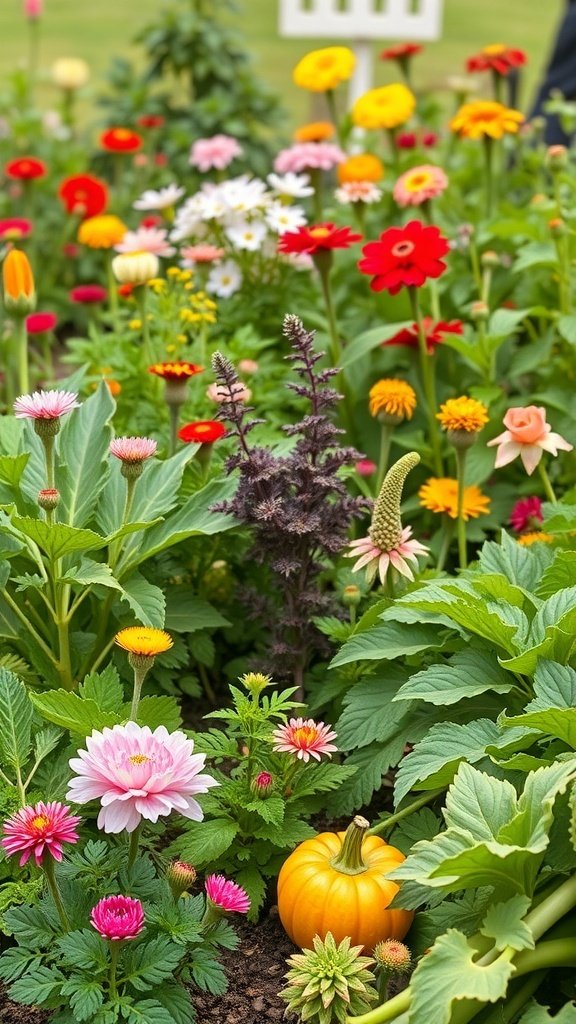
The 1920s were a time of bold colors and lively patterns, reflected beautifully in gardens of the era. Imagine a vibrant mix of roses in shades of pink, yellow, and orange, just like the ones in the image. These colors create a cheerful atmosphere, perfect for home veggie patches and flower gardens.
Incorporating these hues into your garden not only adds beauty but also inspires creativity in your cooking. Fresh veggies like tomatoes, peppers, and herbs can be paired with colorful flowers to create a stunning visual feast.
When it comes to cooking from your garden, think about simple yet delicious dishes. A fresh salad with mixed greens, cherry tomatoes, and edible flowers can be a showstopper. Or try roasting seasonal veggies with a drizzle of olive oil and herbs for a tasty side. The key is to let the colors of your garden shine on your plate!
Herb Gardens with Historical Significance
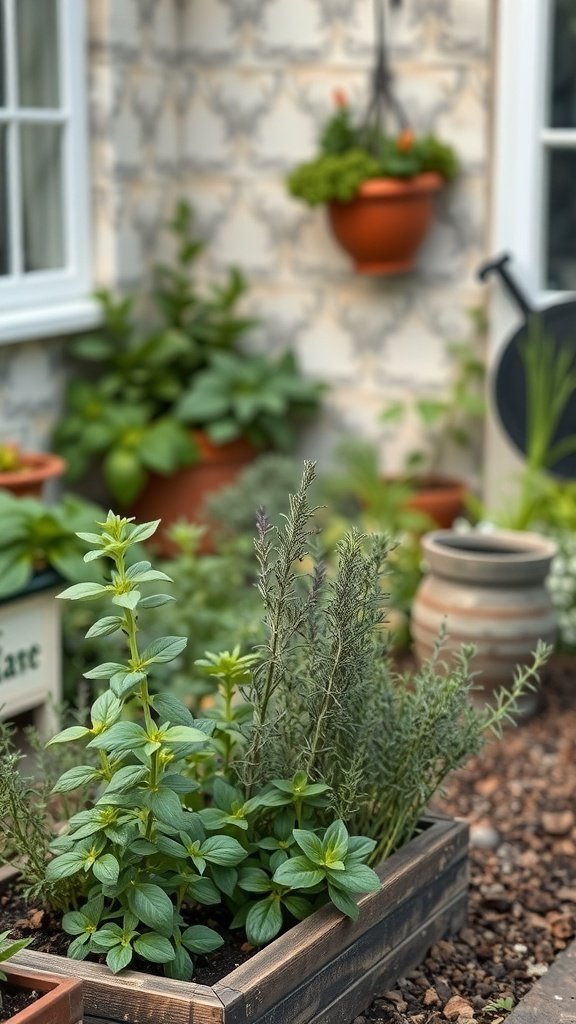
Herb gardens have a rich history, especially in the context of the 1920s. Back then, many households grew their own herbs, not just for cooking but also for medicinal purposes. The image shows a charming herb garden, complete with a variety of plants like oregano and rosemary. These herbs were staples in many kitchens, adding flavor and health benefits to meals.
Creating a home veggie patch or herb garden can be a delightful way to connect with this history. It’s not just about growing plants; it’s about cultivating a piece of the past. Imagine stepping outside to snip fresh herbs for your dinner. It brings a sense of satisfaction and nostalgia.
When cooking from your garden, think about simple dishes that highlight your fresh herbs. A classic herb-infused olive oil is easy to make. Just blend your favorite herbs with olive oil, and you have a tasty addition to salads or bread. You can also toss fresh herbs into pasta dishes or use them to season roasted vegetables.
Edible Flowers for a Vintage Touch
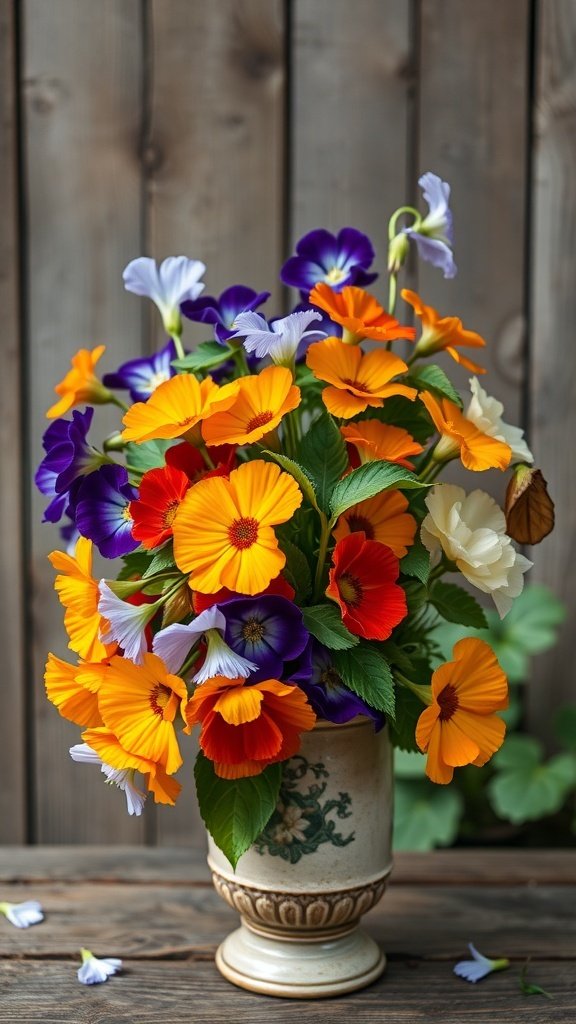
Picture a charming bouquet filled with vibrant edible flowers like nasturtiums and pansies. These blooms not only add color to your home veggie patches but also bring a vintage flair reminiscent of the 1920s. The mix of orange, purple, and white flowers creates a cheerful display that can brighten any space.
Edible flowers are a delightful addition to your garden. They can be used in salads, desserts, or as garnishes for various dishes. Imagine tossing some nasturtiums into a fresh salad for a peppery kick or using pansies to decorate a cake. Their unique flavors and stunning colors make them a perfect choice for those looking to add a vintage touch to their meals.
When planning your home veggie patches, consider planting these flowers alongside your vegetables. Not only do they attract beneficial insects, but they also enhance the overall beauty of your garden. Plus, they are easy to grow and care for, making them a great choice for both novice and experienced gardeners.
For a simple dish, try making a salad with mixed greens, sliced cucumbers, and a handful of edible flowers. Drizzle with a light vinaigrette, and you have a stunning and tasty meal. You can also freeze the flowers in ice cubes for a lovely addition to summer drinks. The possibilities are endless!
Seasonal Planting Guides from the 1920s
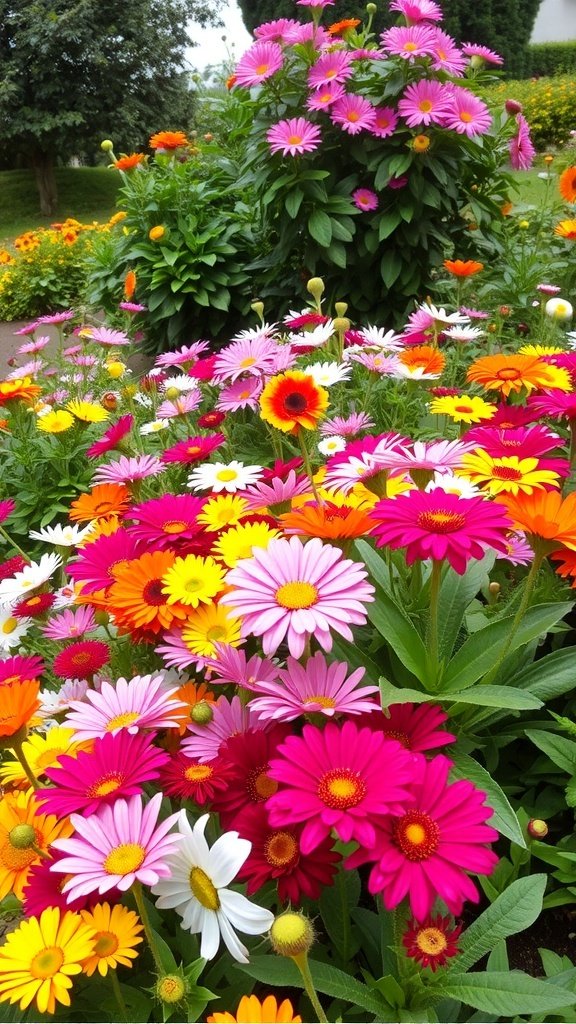
The image captures a vibrant scene reminiscent of the 1920s, showcasing a lush garden filled with colorful flowers and a planting calendar. This calendar serves as a reminder of the seasonal rhythms that guided gardeners in that era. Home veggie patches were not just about growing food; they were a way to connect with nature and enjoy the beauty of blooms alongside vegetables.
In the 1920s, gardeners relied on seasonal planting guides to determine the best times to sow seeds. The calendar in the image highlights key planting dates, helping gardeners plan their crops effectively. This practice ensured a bountiful harvest, allowing families to enjoy fresh produce throughout the year.
For those inspired by this vintage approach, consider planting a mix of vegetables and flowers. Marigolds, for example, can deter pests while adding a pop of color. As you harvest your veggies, think about simple dishes to prepare. Fresh salads with tomatoes, cucumbers, and herbs make for a delightful meal. Roasted vegetables can also bring out the natural sweetness of your garden produce.
Creating a Pollinator-Friendly Space
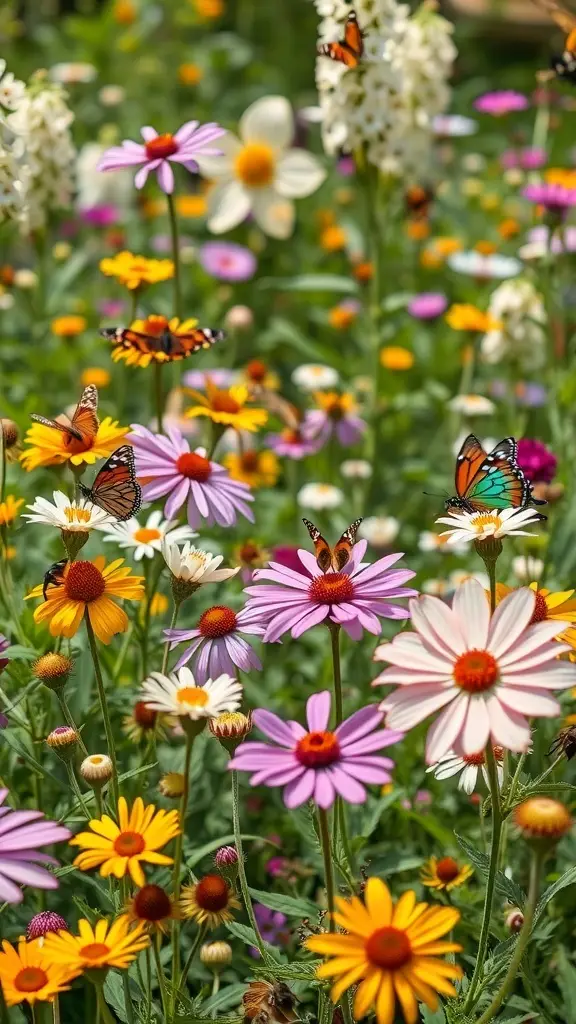
Creating a pollinator-friendly space in your garden is a wonderful way to support local wildlife and enhance your home veggie patches. The image showcases a vibrant mix of flowers, attracting butterflies and bees. These pollinators play a crucial role in helping plants reproduce, which is essential for growing your vegetables.
Start by choosing a variety of native flowers that bloom at different times throughout the season. This ensures that there’s always something for the pollinators to enjoy. Flowers like daisies, coneflowers, and sunflowers not only look beautiful but also provide food for bees and butterflies.
To make your garden even more inviting, avoid using pesticides. Instead, opt for natural pest control methods. This keeps your flowers healthy and the pollinators safe. Adding a small water source, like a shallow dish with pebbles, can also help attract these beneficial creatures.
When it comes to cooking from your garden, think about incorporating fresh herbs and veggies into your meals. Basil, parsley, and tomatoes are great options. You can whip up a simple salad or a flavorful pasta dish using your homegrown ingredients. Enjoying the fruits of your labor while supporting pollinators makes gardening even more rewarding!
Water Features with Vintage Appeal
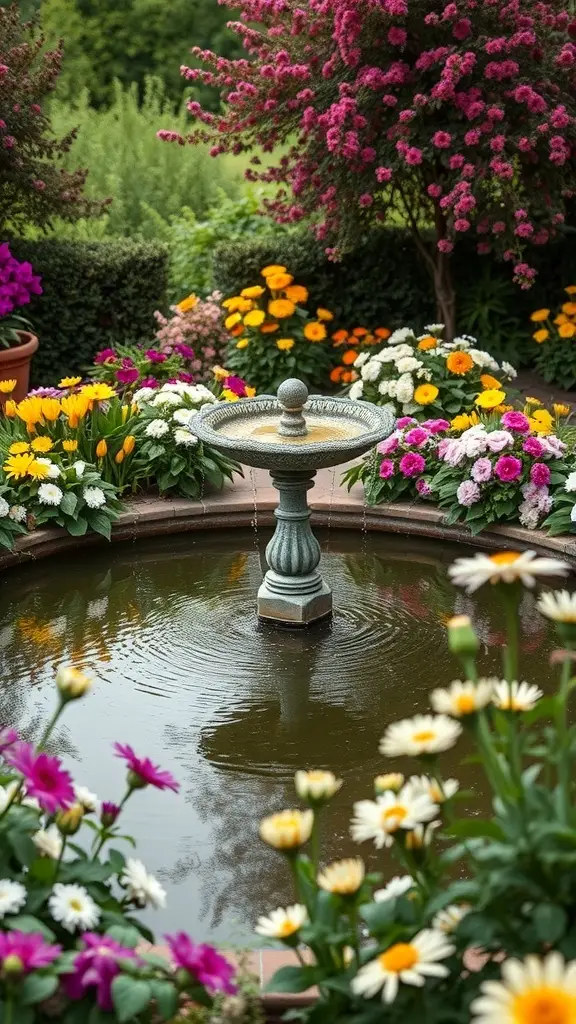
Water features can bring a touch of charm to any garden, especially when inspired by the 1920s. Imagine a quaint fountain surrounded by vibrant flowers, just like the one in the image. This classic design not only adds beauty but also creates a soothing atmosphere. The gentle sound of water can make your garden feel like a peaceful retreat.
Incorporating a fountain into your home veggie patches or flower gardens can enhance the overall appeal. It serves as a focal point that draws the eye and invites relaxation. The combination of colorful blooms and flowing water creates a delightful scene, perfect for enjoying a sunny afternoon.
When planning your garden, think about what to cook from your veggie patches. Fresh herbs like basil and parsley can elevate any dish. Try making a simple pasta with sautéed veggies and a sprinkle of herbs for a quick meal. Or, whip up a refreshing salad using your homegrown tomatoes and cucumbers. These dishes not only taste great but also celebrate the fruits of your labor.
Incorporating Ornamental Grasses

Ornamental grasses can add a lovely touch to your home veggie patches and flower gardens, especially when inspired by the 1920s. These grasses bring texture and movement, creating a soft contrast against the vibrant colors of your vegetables and flowers.
In the image, you can see tall, feathery grasses swaying gently in the breeze. Their soft hues and wispy forms evoke a sense of nostalgia, reminiscent of gardens from a bygone era. Planting these grasses around your veggie patches not only enhances the visual appeal but also attracts beneficial insects.
When planning your garden, think about how these grasses can frame your veggies. They can act as natural dividers, giving each section of your garden its own character. Plus, they require minimal maintenance, making them perfect for busy gardeners.
As you harvest from your home veggie patches, consider using fresh ingredients in simple dishes. For instance, a garden salad with crisp lettuce, juicy tomatoes, and a sprinkle of herbs can be a delightful way to enjoy your produce. You might also try sautéing zucchini and bell peppers with garlic for a quick side dish. These meals highlight the freshness of your garden and are easy to prepare.
Wildflower Gardens for a Nostalgic Feel
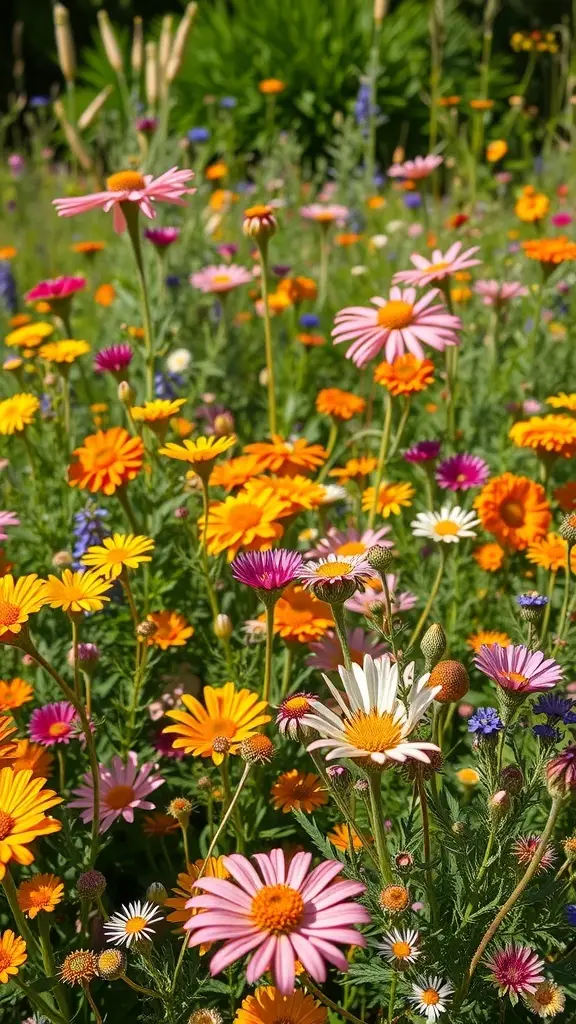
Wildflower gardens bring a touch of nostalgia, reminiscent of the vibrant blooms found in the 1920s. The image showcases a colorful array of flowers, creating a joyful and lively atmosphere. These gardens often feature a mix of daisies, marigolds, and other cheerful blooms that attract butterflies and bees, enhancing the garden’s charm.
Creating a wildflower garden is a wonderful way to connect with nature. You can start by selecting seeds that are native to your area. This not only supports local wildlife but also ensures that your garden flourishes. Consider planting in clusters for a more natural look, and don’t forget to leave some space for home veggie patches. This combination can be both beautiful and productive.
When it comes to cooking from your garden, think about fresh salads or colorful vegetable stir-fries. Use your home-grown veggies like tomatoes, cucumbers, and peppers to whip up a refreshing salad. Toss in some edible flowers for a pop of color and flavor. You can also make a simple vegetable soup using whatever is in season. The freshness will shine through in every bite!
DIY Garden Projects with Vintage Style
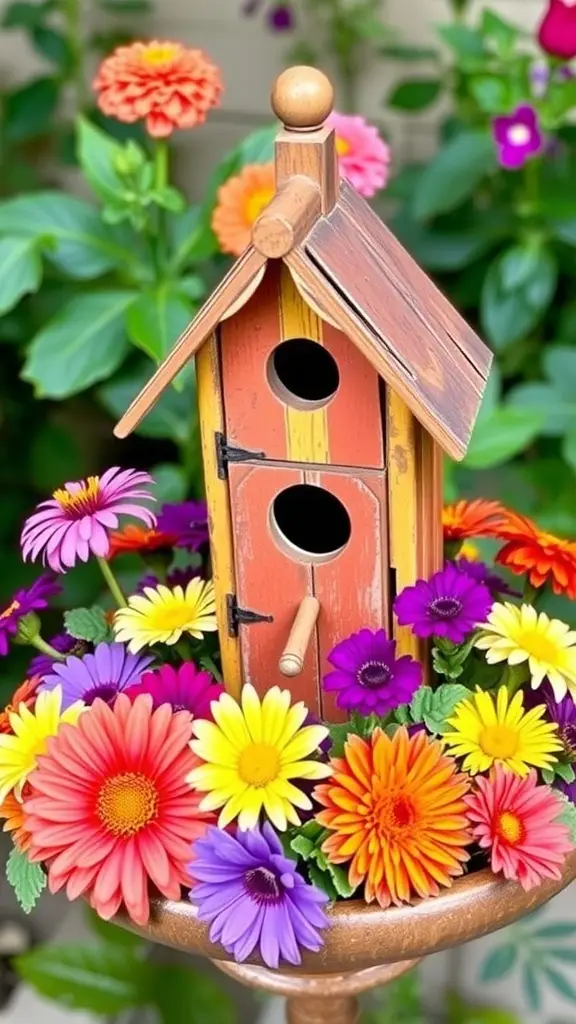
Creating a garden that reflects the charm of the 1920s can be a delightful project. Imagine a cozy space filled with vibrant flowers and a rustic birdhouse, just like the one in the image. This simple yet stylish birdhouse adds a touch of nostalgia and invites nature right into your backyard.
Home veggie patches are a fantastic way to blend beauty with functionality. You can grow your own tomatoes, herbs, and peppers, making your garden not just pretty but also practical. The bright flowers surrounding the birdhouse remind us of the colorful gardens popular in the 1920s, where every corner was bursting with life.
When planning your garden, think about what you can cook from your veggie patch. Fresh tomatoes can be used in salads or sauces, while herbs like basil and parsley can elevate any dish. Even simple veggies like zucchini can be grilled or sautéed for a quick meal. Embrace the vintage vibe by using heirloom seeds for a taste of the past!
Garden Layouts Reflecting 1920s Trends
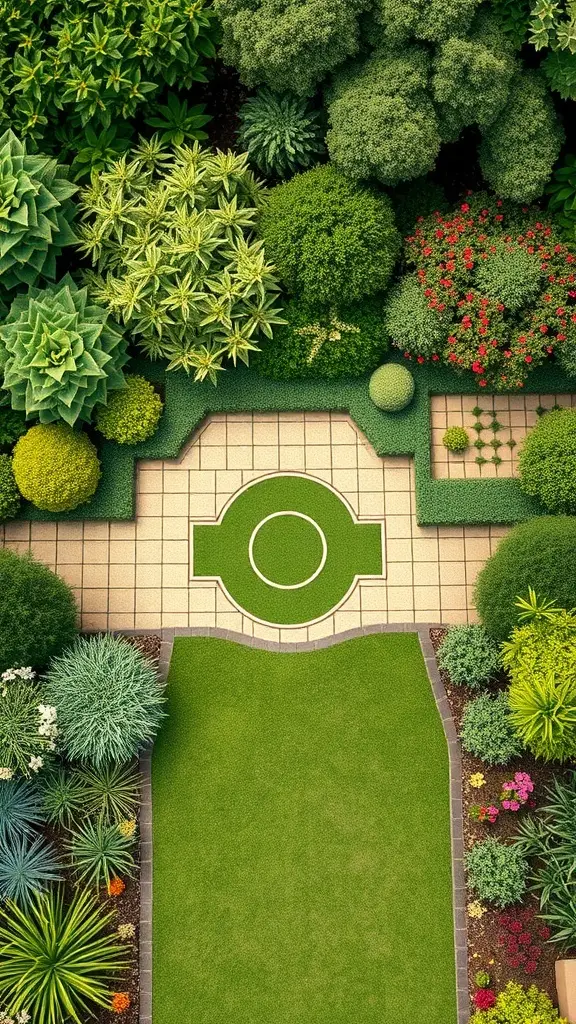
The image showcases a beautifully arranged garden that reflects the design trends of the 1920s. This era emphasized symmetry and clean lines, evident in the layout of the paths and plant arrangements. The circular feature in the center draws the eye, creating a focal point that invites exploration.
Home veggie patches were becoming popular during this time, as families sought to grow their own food. The lush greenery and vibrant flowers around the garden not only add beauty but also suggest a practical approach to gardening. This blend of aesthetics and utility is a hallmark of 1920s garden design.
For those looking to cook from their garden, consider using fresh herbs like basil and parsley in a simple pasta dish. Toss in some tomatoes and zucchini for a colorful and healthy meal. You can also whip up a refreshing salad with mixed greens, radishes, and a light vinaigrette. These dishes highlight the freshness of homegrown produce and make the most of your veggie patch.
The Role of Garden Clubs in the 1920s
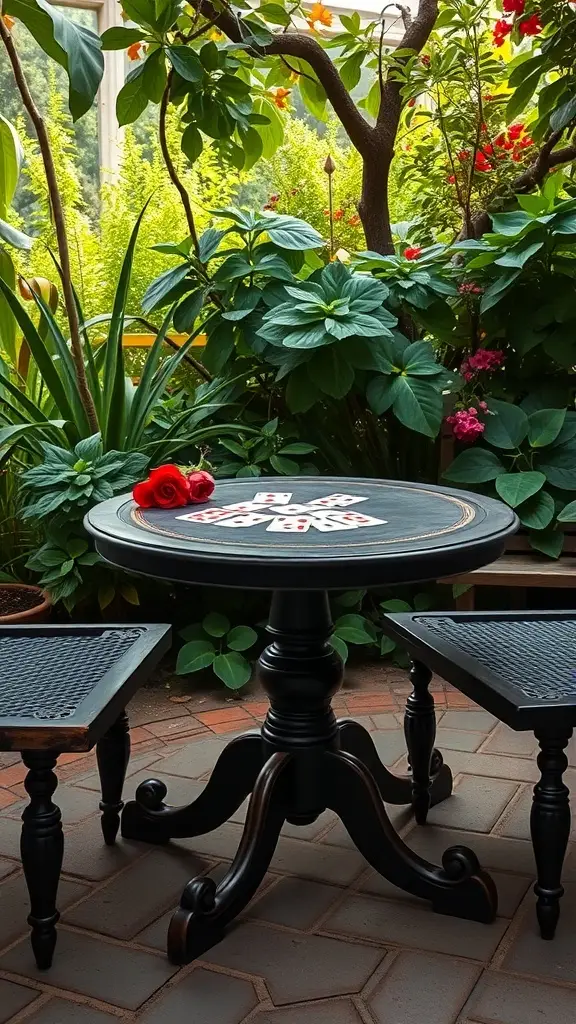
Garden clubs played a significant role in the 1920s, bringing people together to share their love for gardening. These clubs were often a social hub where members exchanged tips, seeds, and ideas about home veggie patches and flower gardens. The image captures a lovely gathering, showcasing the camaraderie that blossomed in these settings.
In the photo, a group of friends enjoys a delightful afternoon in a garden, surrounded by vibrant flowers. This scene reflects the spirit of the 1920s, where gardening was not just a hobby but a way to connect with others. The lush greenery and colorful blooms create a perfect backdrop for sharing stories and recipes.
Garden clubs encouraged members to cultivate their own veggie patches, promoting self-sufficiency and healthy eating. Imagine the joy of harvesting fresh tomatoes, cucumbers, and herbs right from your backyard! These ingredients can be used in simple recipes like a refreshing summer salad or a hearty vegetable soup.
For those looking to cook from their garden, consider tossing together a salad with freshly picked greens, tomatoes, and cucumbers. A drizzle of olive oil and a squeeze of lemon can elevate the flavors. Alternatively, sautéing seasonal veggies with garlic makes for a quick and tasty side dish. The possibilities are endless!
Creating a Sensory Garden Experience
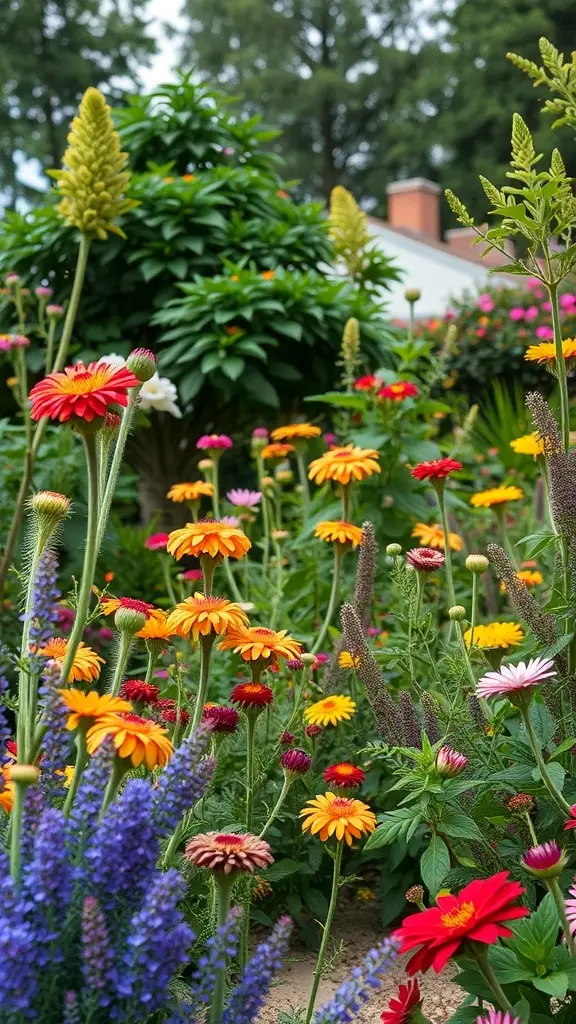
Imagine stepping into a garden bursting with color and life. The vibrant flowers in shades of red, orange, and purple create a stunning visual display. This lively scene is reminiscent of the 1920s, a time when home veggie patches and flower gardens flourished. The mix of blooms not only pleases the eyes but also invites you to explore the scents and textures around you.
A sensory garden is all about engaging your senses. Touch the soft petals of the flowers, breathe in their sweet fragrance, and listen to the gentle rustle of leaves in the breeze. This garden can be a peaceful retreat or a fun spot for family gatherings. It’s a place where you can unwind and connect with nature.
When you grow your own veggies alongside these beautiful flowers, you create a delightful experience. Consider planting tomatoes, peppers, or herbs like basil and mint. These fresh ingredients can inspire delicious meals right from your garden. For a simple dish, try making a fresh tomato salad. Just chop up your ripe tomatoes, add some basil, a drizzle of olive oil, and a pinch of salt. It’s a tasty way to enjoy your garden’s bounty!
Another fun idea is to use edible flowers in your cooking. Nasturtiums and pansies not only look beautiful but also add a peppery or sweet flavor to salads. With a little creativity, your sensory garden can become a source of inspiration for both your cooking and your relaxation.
Preserving Vintage Seeds
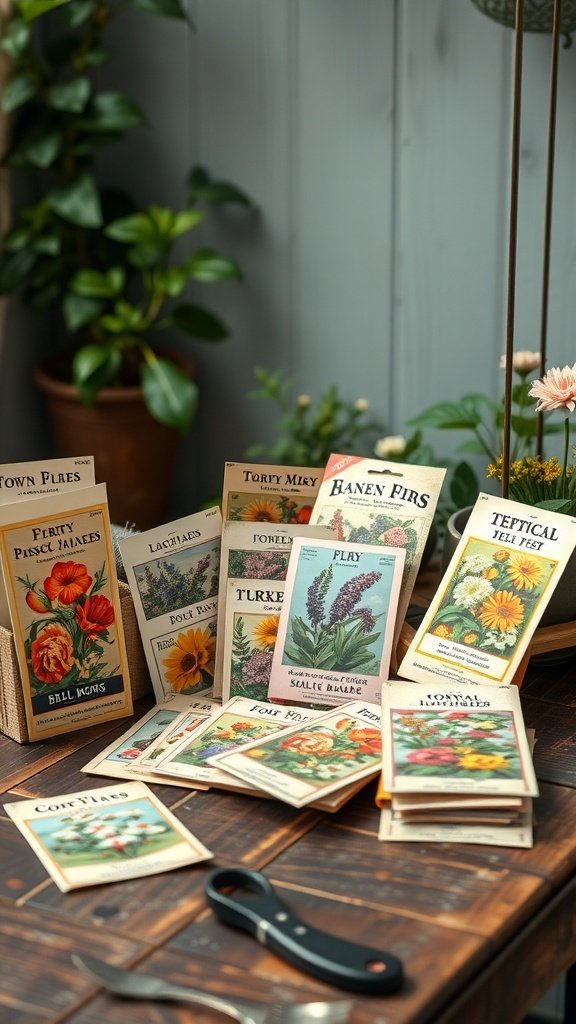
Vintage seeds hold a special charm, connecting us to the gardening traditions of the past. The image shows a delightful collection of seed packets, each one a promise of vibrant blooms and fresh veggies. These packets are not just pretty; they represent a legacy of flavors and colors that have been cherished for generations.
Home veggie patches can benefit greatly from these heirloom seeds. They often produce crops that are tastier and more resilient than many modern varieties. Imagine growing tomatoes that taste like they did in your grandmother’s garden or flowers that remind you of a sunny afternoon from your childhood.
When you plant these seeds, you’re not just gardening; you’re preserving history. Each packet tells a story, and planting them allows you to be part of that story. Plus, it’s a fun way to engage with nature and enjoy the fruits of your labor.
Once your garden starts to flourish, you’ll have plenty of fresh ingredients to work with. Try making a simple salad with your home-grown lettuce, tomatoes, and cucumbers. Toss in some herbs for added flavor. Or, if you have a bounty of zucchini, consider whipping up a delicious zucchini bread. The possibilities are endless!
Vintage Plant Markers and Labels

In the charming world of home veggie patches, vintage plant markers add a delightful touch. These wooden signs, with their handwritten labels, bring a sense of nostalgia that echoes the 1920s gardening style. Each marker tells a story, guiding you through the vibrant greens and colorful blooms of your garden.
Imagine strolling through your patch, each plant proudly labeled with its name. From ‘Curry & Time’ to ‘Plant Tine,’ these markers not only help you remember what you’ve planted but also spark joy with their rustic charm. They remind us of simpler times when gardening was a cherished pastime.
Using these markers can inspire your cooking too! Fresh herbs like thyme and curry can elevate your dishes. Try making a simple herb-infused oil or a fragrant curry to enjoy the fruits of your labor. A fresh salad with homegrown veggies and herbs is always a hit, bringing the flavors of your garden right to the table.
Creating a 1920s Inspired Greenhouse

A 1920s inspired greenhouse can be a charming addition to your home veggie patches and flower gardens. This image showcases a lovely greenhouse filled with vibrant flowers and lush greenery. The design reflects the era’s love for nature and gardening, creating a peaceful retreat right in your backyard.
To capture that 1920s vibe, think about using wooden frames and glass panels that allow plenty of sunlight in. You can fill your greenhouse with a mix of flowers and vegetables, creating a colorful and productive space. Consider plants like roses, chrysanthemums, and herbs to add both beauty and functionality.
When it comes to cooking from your garden, fresh herbs can elevate any dish. Try using basil and parsley in a simple pasta or make a refreshing herb salad. If you grow tomatoes, they can be the star of a delicious caprese salad. Don’t forget to experiment with seasonal veggies like zucchini or bell peppers in stir-fries or roasted dishes!
The Influence of the Arts and Crafts Movement

The Arts and Crafts Movement had a big impact on home gardens in the 1920s. This movement celebrated handmade items and natural beauty, encouraging people to create their own spaces filled with plants and flowers. The image shows a lovely garden with a charming entrance, surrounded by lush greenery and colorful blooms. This setting reflects the ideals of the movement, blending nature with artistry.
Home veggie patches became popular during this time, as people wanted to grow their own food. The garden in the image could easily include a small veggie patch, filled with fresh tomatoes, peppers, and herbs. These plants not only add beauty but also provide delicious ingredients for meals.
Cooking from the garden is a rewarding experience. Fresh veggies can be used in simple dishes like salads or stir-fries. For a quick meal, try tossing together some sautéed zucchini, bell peppers, and cherry tomatoes. Add a sprinkle of fresh herbs for extra flavor. This way, you can enjoy the fruits of your labor right from your own garden!
Sustainable Practices Inspired by the Past
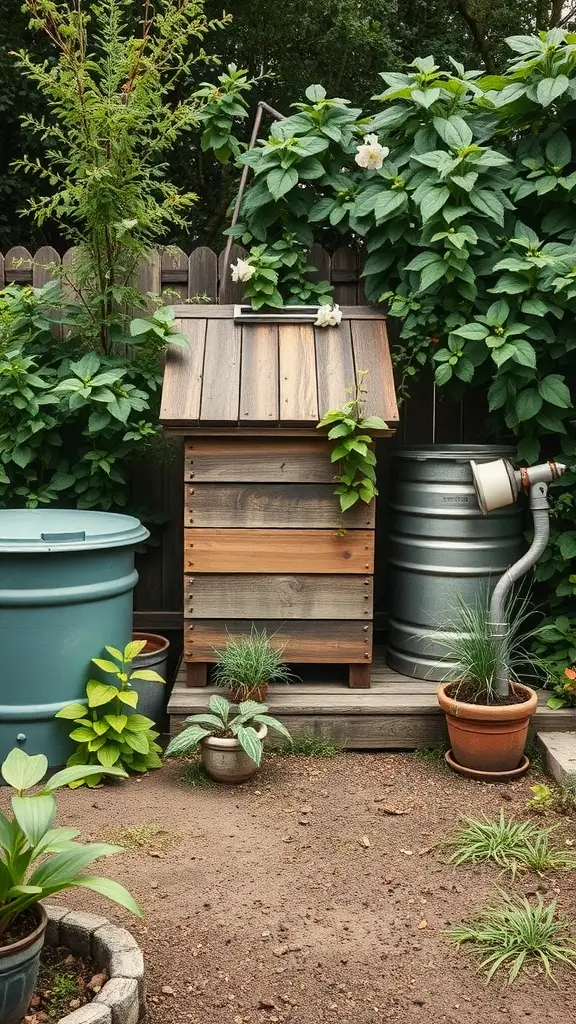
The image showcases a charming backyard setup, reminiscent of the 1920s, featuring a rustic compost bin surrounded by lush greenery. This scene reflects the sustainable practices of the past, where every inch of space was utilized for gardening. Home veggie patches were not just a trend; they were a way of life. The compost bin symbolizes a commitment to recycling organic waste, turning it into nutrient-rich soil for growing vegetables and flowers.
Creating a home veggie patch can be simple and rewarding. Start by selecting a sunny spot in your yard. You can plant easy-to-grow vegetables like tomatoes, lettuce, and radishes. These veggies thrive in small spaces and are perfect for beginners. Consider companion planting, where you grow different plants together for mutual benefits. For instance, tomatoes and basil make great companions, enhancing each other’s growth.
When it comes to cooking from your garden, the possibilities are endless. Fresh tomatoes can be used in salads, sauces, or even a classic Caprese dish with mozzarella and basil. Lettuce is perfect for crisp salads, while radishes add a peppery crunch. You can also experiment with herbs like basil and parsley to elevate your dishes. Using fresh ingredients from your garden not only enhances flavor but also promotes a sustainable lifestyle.
Garden Art and Decor from the 1920s

The image captures a delightful scene of a garden filled with vibrant flowers and charming statues, reminiscent of the 1920s. This era celebrated both beauty and functionality in gardens, blending art with nature. The colorful blooms, like zinnias and dahlias, add a cheerful touch, while the statues bring a sense of whimsy and elegance.
In the 1920s, gardens were often seen as extensions of the home. People loved to decorate their outdoor spaces with art pieces that reflected their personal style. Statues of children, animals, and mythical figures were popular, much like the ones in the image. These pieces not only beautified the garden but also created a welcoming atmosphere for family and friends.
For those with home veggie patches, incorporating decorative elements can enhance the overall look. Consider adding a small birdbath or a whimsical garden gnome. These touches can make your garden feel more inviting while still being functional.
When it comes to cooking from your garden, the fresh produce offers endless possibilities. Try making a simple salad with your homegrown tomatoes, cucumbers, and herbs. A quick sauté of zucchini and bell peppers can also make a delicious side dish. Don’t forget to use those vibrant flowers as edible garnishes for a beautiful presentation!
Incorporating Garden Statues and Fountains
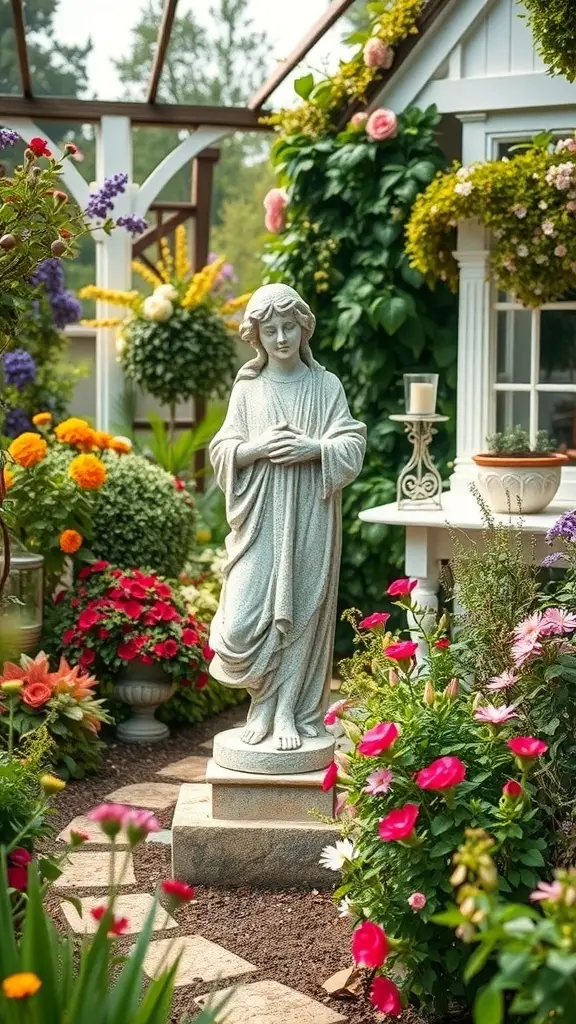
Garden statues and fountains can add a charming touch to your home veggie patches and flower gardens. Imagine a serene statue standing amidst vibrant blooms, creating a focal point that draws the eye. This image captures a lovely statue surrounded by colorful flowers, showcasing how art can enhance the natural beauty of your garden.
In the 1920s, gardens often featured ornamental elements like statues and fountains. These pieces not only beautified the space but also reflected the era’s appreciation for nature and artistry. Incorporating similar elements today can bring a nostalgic feel to your garden, making it a delightful retreat.
When planning your garden, think about where to place a statue or fountain. Position them where they can be admired from different angles. A fountain can also provide soothing sounds, adding to the relaxing atmosphere of your outdoor space.
While you’re enjoying your garden, don’t forget to make use of your home veggie patches! Fresh veggies can inspire delicious meals. Try tossing together a simple salad with lettuce, tomatoes, and cucumbers straight from your garden. Or, whip up a veggie stir-fry with bell peppers, zucchini, and carrots. The flavors will be vibrant and fresh, making your meals even more enjoyable.
Nostalgic Garden Lighting Ideas

Picture a cozy evening in your garden, where soft lights twinkle among vibrant flowers. This scene captures the charm of a 1920s garden, complete with lanterns casting a warm glow. The flowers, in shades of pink, white, and orange, add a lively touch, making the space feel inviting.
Using lanterns and string lights can recreate that nostalgic feel. They not only brighten the area but also create a lovely atmosphere for gatherings or quiet evenings. Consider placing lanterns along pathways or hanging string lights above your home veggie patches to enhance the charm.
When you harvest from your garden, think about simple dishes to showcase your fresh veggies. A colorful salad with tomatoes, cucumbers, and herbs can be a delightful treat. Or, try a stir-fry with bell peppers and zucchini, adding a splash of soy sauce for flavor. These meals celebrate the bounty of your garden while keeping things easy and delicious.
Creating a Cozy Garden Nook
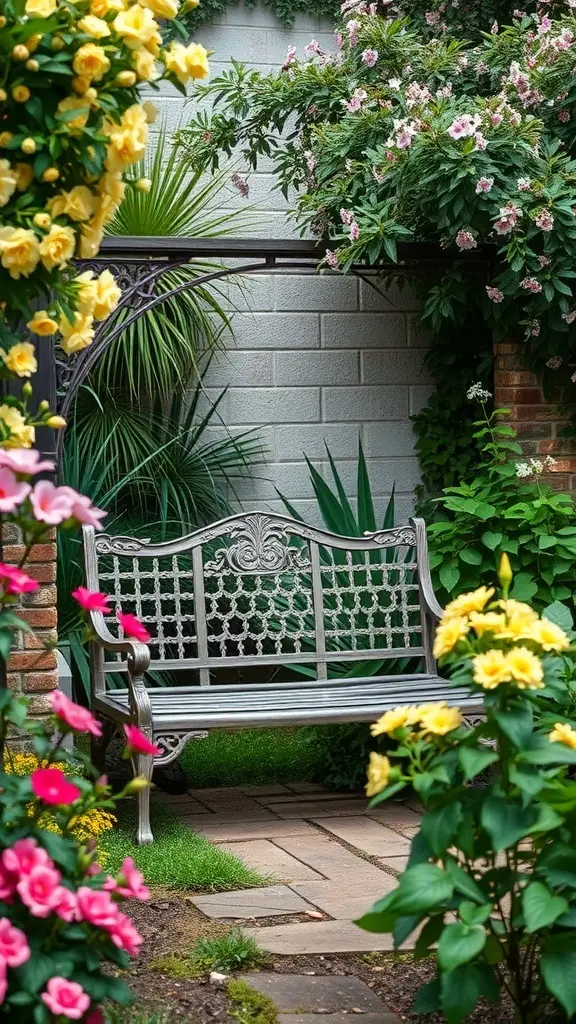
Imagine stepping into a garden that feels like a warm hug. The image shows a charming nook, complete with a lovely bench surrounded by vibrant flowers. This cozy space invites you to sit back and enjoy nature’s beauty. The mix of colors from the flowers adds a cheerful touch, making it a perfect spot for relaxation.
Creating your own cozy garden nook can be a delightful project. Start by choosing a comfortable bench or chair. Surround it with your favorite blooms, like roses or daisies, to add color and fragrance. You can also include some greenery, like ferns or small shrubs, to create a sense of privacy.
Incorporating home veggie patches nearby can enhance your garden experience. Imagine picking fresh tomatoes or herbs right from your garden. These ingredients can be used in simple recipes. For example, a fresh tomato salad with basil and olive oil makes for a quick and tasty dish. Or, try sautéing some zucchini with garlic for a delicious side.
Don’t forget to add personal touches, like decorative stones or fairy lights, to make the space truly yours. A cozy nook is not just about aesthetics; it’s also about creating a place where you can unwind and enjoy the fruits of your labor.
Gardening as a Social Activity in the 1920s
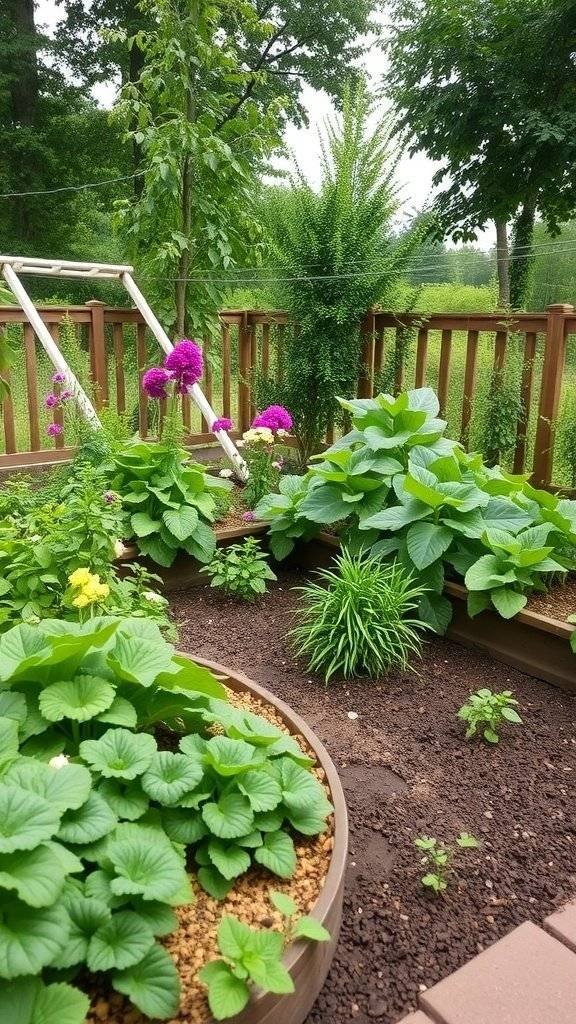
The 1920s was a lively time for gardening, where home veggie patches and flower gardens became more than just a hobby. They turned into a social activity that brought people together. In the image, we see a group of individuals working together in a garden, sharing tips and laughter. This reflects how gardening was a communal effort, fostering friendships and connections.
During this era, many families started growing their own vegetables. It was not just about saving money; it was a way to bond with neighbors and friends. Community gardens began popping up, allowing people to share their harvests and recipes. Imagine swapping fresh tomatoes for a delicious pie!
Cooking from the garden was a big part of the experience. Fresh herbs, like basil and parsley, could easily enhance any dish. A simple salad made with homegrown lettuce, tomatoes, and cucumbers is a great way to enjoy the fruits of your labor. You could also whip up a hearty vegetable soup using whatever is in season.
Gathering around the dinner table to share meals made from the garden was a cherished tradition. It was a time to celebrate the hard work put into the veggie patches. The 1920s taught us that gardening is not just about plants; it’s about community, sharing, and enjoying the simple pleasures of life.
Seasonal Decorating Tips for the Garden
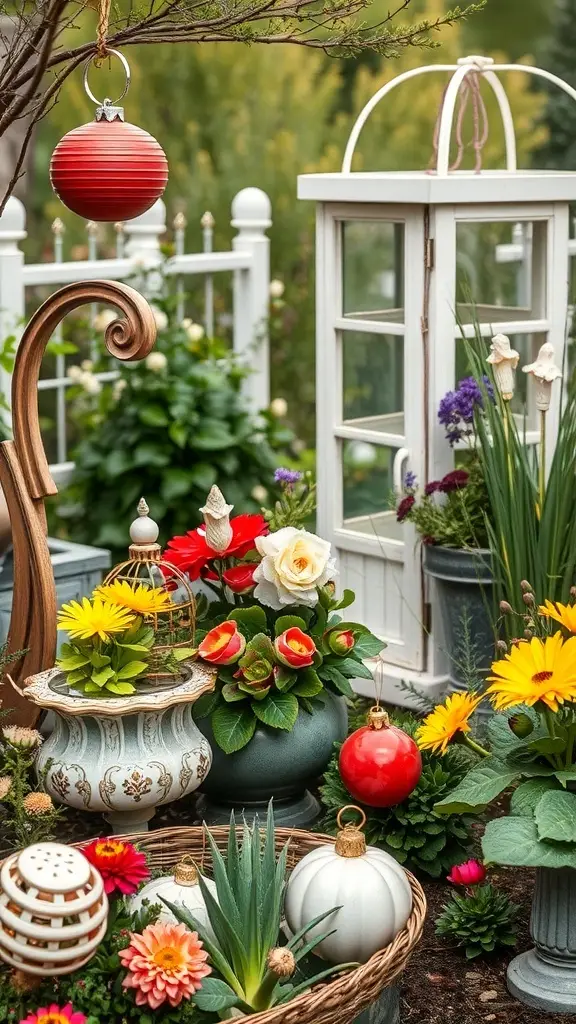
Creating a garden inspired by the 1920s can be a delightful way to bring a touch of vintage charm to your home. The image showcases a beautifully arranged space filled with colorful flowers, decorative lanterns, and charming accents. These elements not only add beauty but also reflect the spirit of the era.
To start, consider incorporating vibrant blooms like daisies and roses, which were popular in the 1920s. Use decorative pots and baskets to create layers and depth in your garden. The mix of textures and colors can make your veggie patches and flower gardens feel lively and inviting.
Seasonal decorations can also enhance your garden’s appeal. Hang lanterns or ornaments from branches to add a whimsical touch. These small details can transform a simple garden into a magical retreat.
When it comes to cooking from your home veggie patches, think about fresh salads or stir-fries. Use leafy greens, tomatoes, and herbs for a quick and tasty meal. You can also roast root vegetables for a comforting side dish. The flavors from your garden will elevate any dish!
Creating a Family-Friendly Garden Space
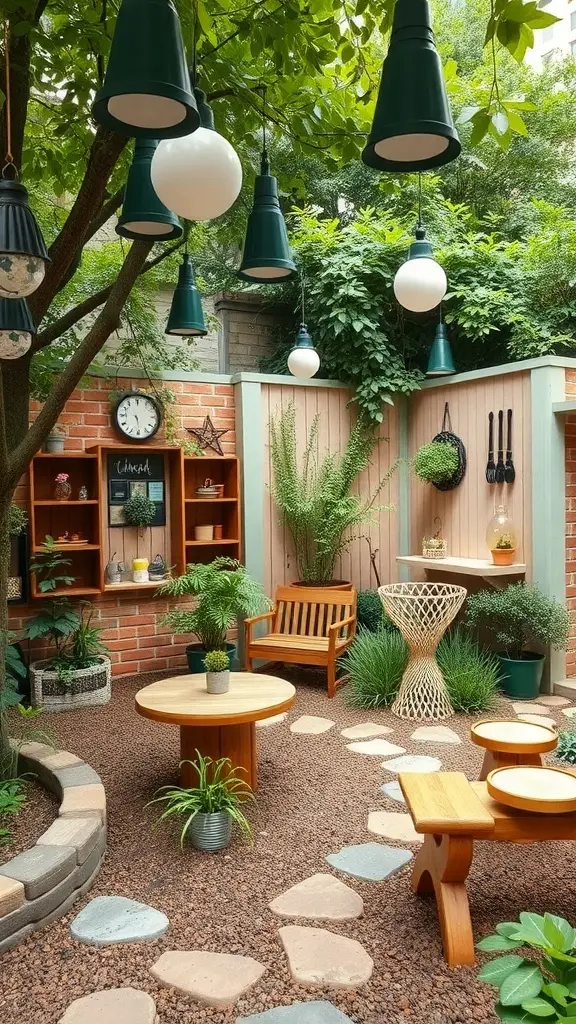
Creating a family-friendly garden space is a delightful way to connect with nature and each other. The image showcases a charming garden filled with vibrant plants, playful decor, and cozy seating areas. This inviting atmosphere encourages family gatherings and outdoor fun.
Home veggie patches are a fantastic addition to any garden. They provide fresh produce and a hands-on way for kids to learn about growing food. Imagine the joy of picking ripe tomatoes or crunchy cucumbers right from your backyard!
To make the most of your garden, think about what to cook from your harvest. Fresh salads can be made with lettuce, tomatoes, and cucumbers. You can also whip up a simple stir-fry using bell peppers and zucchini. For a tasty treat, try roasting root vegetables like carrots and potatoes.
Don’t forget to involve the little ones in the cooking process! They can help wash the veggies or mix ingredients, making mealtime a fun family activity. With a little creativity, your garden can be a source of joy, learning, and delicious meals.
Utilizing Vintage Garden Furniture
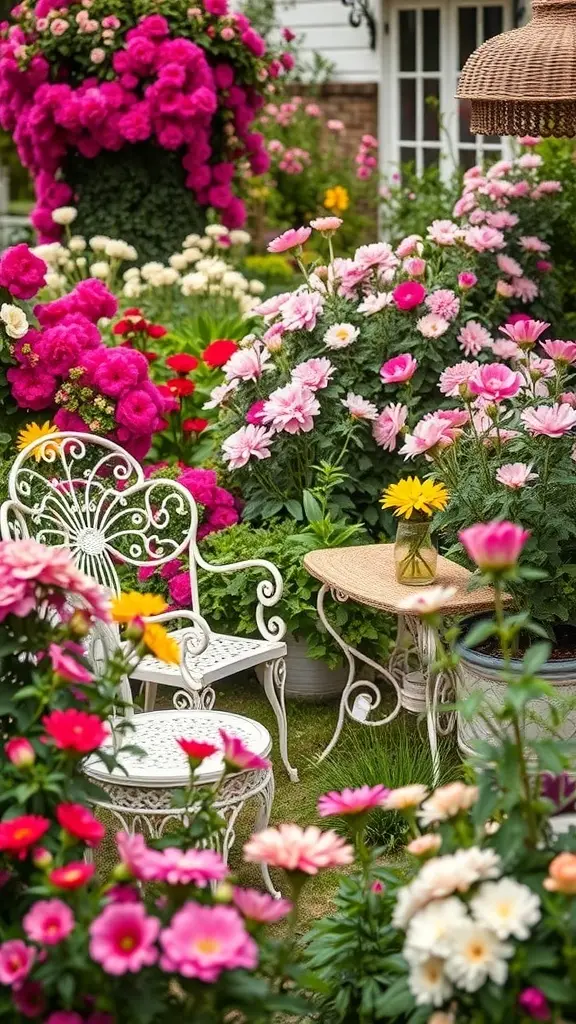
Vintage garden furniture adds charm and character to any outdoor space. The image shows a lovely setup with white metal chairs and a small table, surrounded by vibrant flowers. This kind of furniture is reminiscent of the 1920s, bringing a nostalgic feel to modern home veggie patches and flower gardens.
Incorporating vintage pieces can create cozy nooks where you can relax and enjoy the beauty of your garden. The delicate designs of the chairs and table contrast beautifully with the colorful blooms, making the space inviting. You can sit back, sip a drink, and admire your hard work in the garden.
When planning your garden, think about how to arrange your furniture. Placing a table near your veggie patch can be perfect for enjoying fresh produce right after harvesting. You can also use the table to display your flowers or even host small gatherings with friends and family.
As for cooking, consider using fresh herbs and veggies from your garden. A simple salad with lettuce, tomatoes, and cucumbers makes for a refreshing dish. You can also whip up a veggie stir-fry using bell peppers, zucchini, and fresh herbs. The possibilities are endless!
Art Deco Floral Arrangements
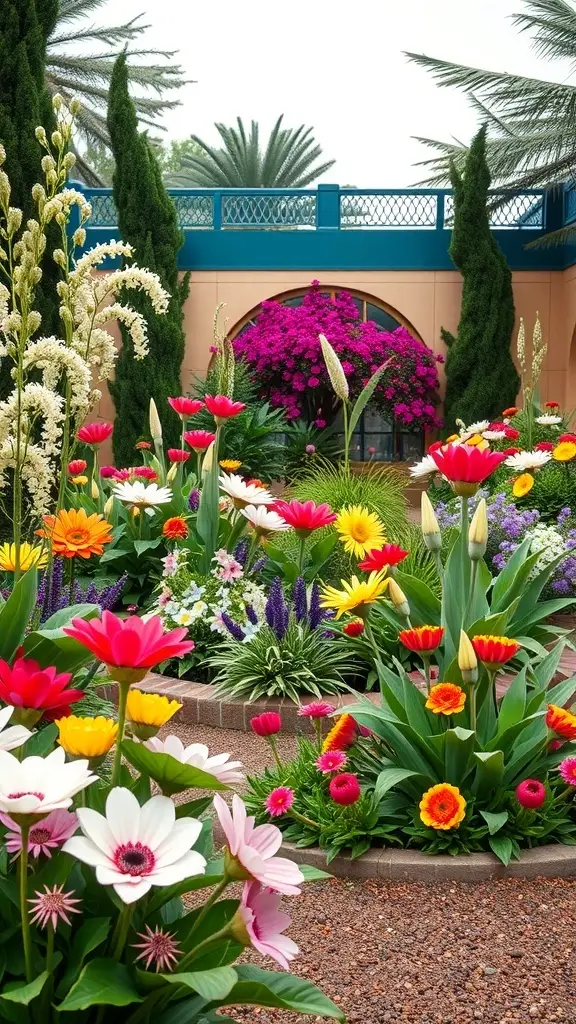
The image showcases a stunning garden filled with vibrant flowers, reflecting the Art Deco style that flourished in the 1920s. This design features bold colors and geometric shapes, creating a lively atmosphere. The mix of flowers, from tulips to daisies, adds a cheerful touch that can inspire anyone to create their own floral arrangements.
Incorporating elements from this era into your home veggie patches can be a delightful way to blend beauty with functionality. Imagine planting colorful flowers alongside your vegetables. Not only do they attract pollinators, but they also add a splash of color to your garden.
When it comes to cooking from your garden, think about using edible flowers like nasturtiums or pansies. They can brighten up salads or be used as garnishes for dishes. Fresh herbs like basil or mint can elevate your meals, adding flavor and freshness. Try making a simple salad with mixed greens, edible flowers, and a light vinaigrette for a beautiful and tasty dish!
Exploring Historic Garden Styles

The image captures a stunning garden that reflects the charm of the 1920s. With neatly trimmed hedges and vibrant flower beds, it showcases a blend of beauty and functionality. This style emphasizes symmetry and order, typical of gardens from that era. The pathways invite you to explore, making it a perfect spot for relaxation and inspiration.
Home veggie patches were also popular during this time. They provided families with fresh produce right from their backyards. Imagine stepping outside to pick ripe tomatoes or crisp lettuce for dinner. It’s a simple pleasure that connects us to our food sources.
For those looking to cook from their garden, consider making a fresh salad with your homegrown veggies. Toss together some mixed greens, cherry tomatoes, and cucumbers. Drizzle with olive oil and balsamic vinegar for a delightful dish. You can also sauté zucchini and bell peppers for a quick side that pairs well with any meal.
The Revival of Cottage Gardens
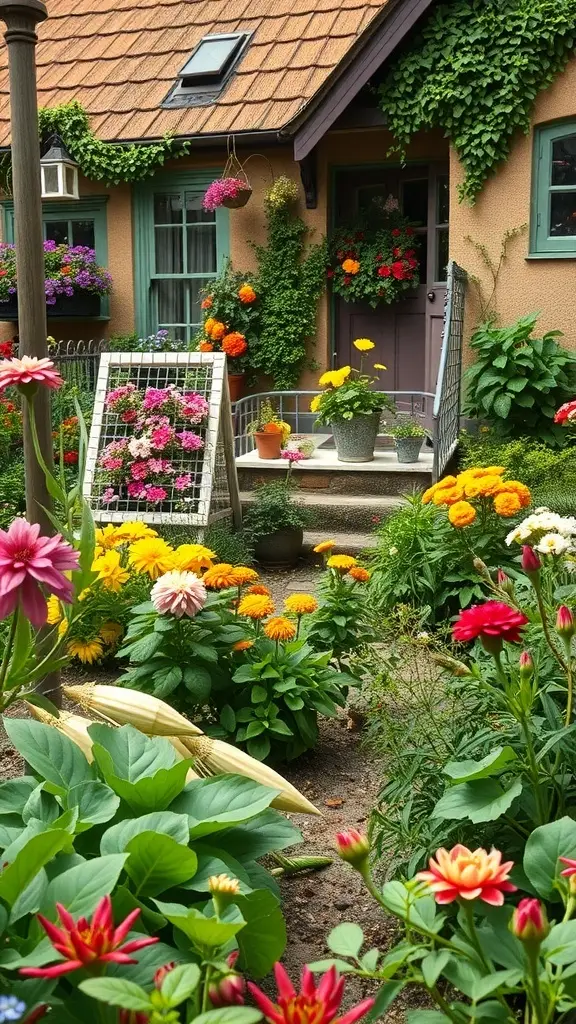
Cottage gardens are making a comeback, bringing a splash of color and life to our homes. The image captures a charming garden filled with vibrant flowers and lush greenery, reminiscent of the 1920s. This style emphasizes a mix of flowers and home veggie patches, creating a cozy and inviting atmosphere.
In the garden, you can spot a variety of blooms, from cheerful marigolds to delicate zinnias. These flowers not only beautify the space but also attract pollinators, which are essential for a thriving garden. The combination of flowers and vegetables is a nod to the practicality of cottage gardens, where beauty meets utility.
For those looking to cook from their garden, consider using fresh herbs like basil and parsley in simple dishes. A quick pasta tossed with olive oil, garlic, and your garden herbs can be a delightful meal. Fresh salads with homegrown tomatoes, cucumbers, and a sprinkle of feta cheese are also a great way to enjoy your harvest.
Don’t forget to experiment with seasonal veggies! Roasting root vegetables or making a hearty vegetable soup can showcase the flavors of your garden. The revival of cottage gardens is not just about aesthetics; it’s about creating a space that nourishes both the body and the soul.
Integrating Natural Stone Pathways
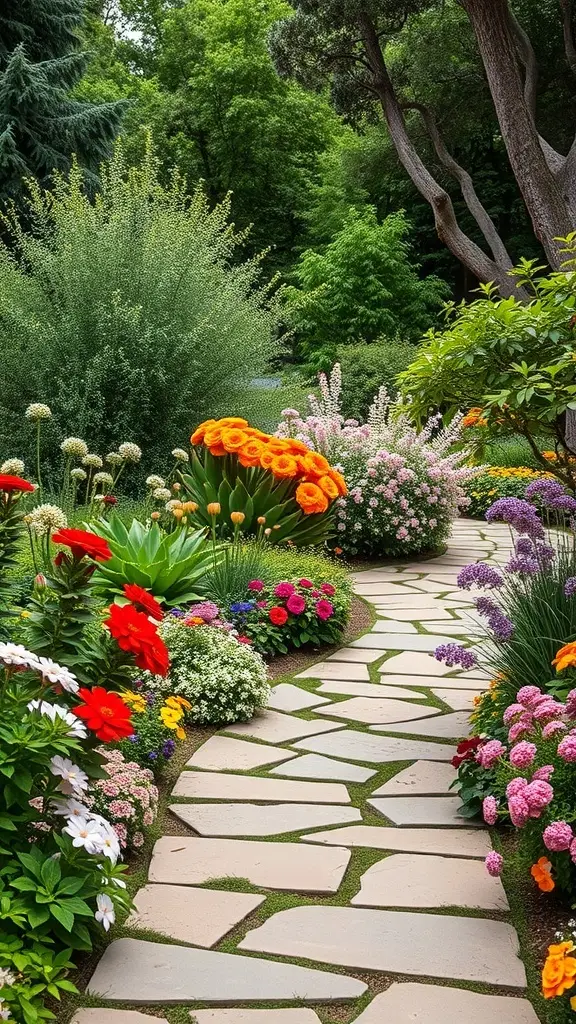
Creating a charming garden space often starts with the right pathways. Natural stone pathways add a rustic touch that fits perfectly with home veggie patches and flower gardens inspired by the 1920s. The image shows a beautiful stone path winding through vibrant flowers, inviting you to explore the lush surroundings.
These pathways not only guide you through your garden but also enhance the overall aesthetic. The mix of colors from the flowers and the earthy tones of the stones creates a warm and welcoming vibe. You can imagine strolling along this path, taking in the sights and scents of your blooming garden.
When planning your garden, think about how these pathways can connect different areas. They can lead from your veggie patch to a cozy seating area or a flower bed. This makes it easy to tend to your plants and enjoy the beauty of your space.
Speaking of your veggie patch, consider what you can cook with your harvest. Fresh tomatoes can be turned into a simple salad, while herbs like basil and parsley can elevate any dish. Zucchini can be grilled or sautéed for a quick side. The possibilities are endless!
Want more?
You may also like:
– 25 Retro Bathroom Decor Ideas Inspired by the 1960s
– 50 Ultimate Art-Deco Kitchens Inspired By The 1920s
– 20 Stunning Home Decor Ideas Inspired by Game of Thrones
If you enjoyed this blog you can visit us or check out our other blogs and learn a bit about us.
Disclaimer: This blog post is inspired by fictional universes and characters created by their respective rights holders. All related content and imagery remain the property of their respective rights holder. This fan-inspired content is for entertainment and commentary purposes only and is not affiliated with or endorsed by HBO, Disney, Warner Bros., Lionsgate, or any other rights holders. To explore the official source material, please visit:
HBO